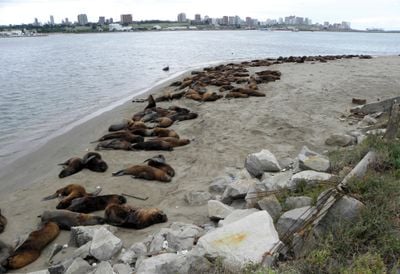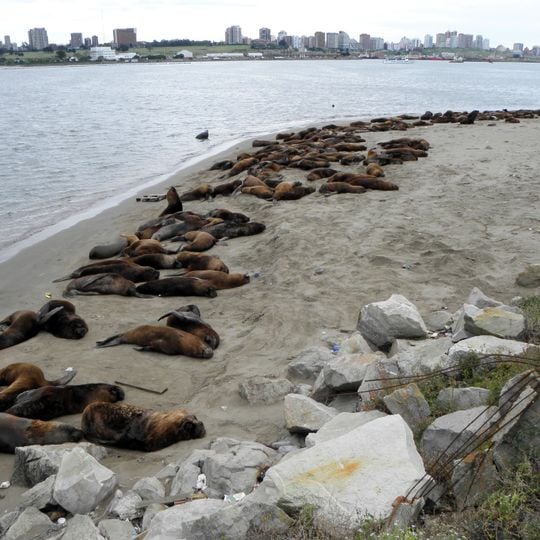
Réserve de loups marins du port de Mar del Plata, Sea lion reserve in Mar del Plata, Argentina.
The Reserva de lobos marinos del puerto de Mar del Plata is a protected area inside the city's working port, where a colony of South American sea lions lives on the rocks and piers along the waterfront. Dedicated observation points allow visitors to watch the animals at close range without entering restricted port areas.
The port of Mar del Plata was designed in the late 19th century and opened in 1924, built by excavating and dredging the coast and enclosing it with the North and South breakwaters. South American sea lions began entering the port in the 1940s, drawn by fish discards, and from 1960 groups settled permanently. In 1986 a group was established at pier 10 of the South breakwater, and a purpose-built resting area with sand and rocks followed about 100 m toward the tip. In January 2002 the colony moved to a sector next to the South breakwater, 700 m from the port entrance.
The sea lions at the port have become part of everyday life in Mar del Plata, and locals often stop to watch them during a walk along the waterfront. Visitors can observe the animals at close range from the dedicated viewing platform, watching them rest, call out, and move between the rocks and the water.
The sea lions tend to be most active in the morning and early afternoon, so those are the best times to visit. The observation points are clearly marked within the port area and easy to reach on foot once you arrive.
The colony's move to its current site came in January 2002, when the port consortium granted Fundación Fauna Argentina a stretch next to the South Breakwater at the old Posta de Inflamables, 700 metres from the harbour mouth. The new resting area measures 230 to 330 metres long and up to 40 metres wide, with a stepped profile: the higher level faces visitors, the lower one is a broad, gentle beach.
The community of curious travelers
AroundUs brings together thousands of curated places, local tips, and hidden gems, enriched daily by 92,633 contributors worldwide.