Buenos Aires Customs, Empire style customs building in Monserrat, Buenos Aires, Argentina
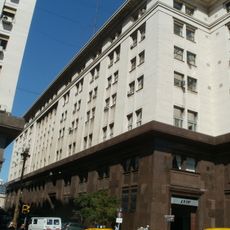
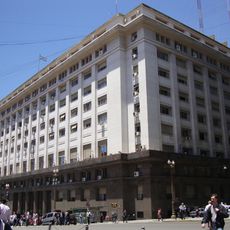
Buenos Aires Customs, also known as the Aduana de Buenos Aires, is an Empire-style building in Monserrat, defined by two symmetrical towers and large ADUANA inscriptions on its facades. The building occupies a full city block and continues to function as an active customs facility.
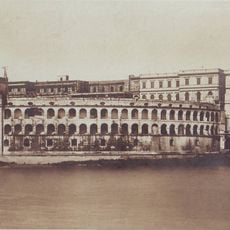
The building was completed in 1910, at a time when Buenos Aires had grown into one of South America's main trading hubs and the port needed more space to handle the volume of goods passing through. It replaced an older customs facility that could no longer keep pace with the traffic.
The name ADUANA is carved above the main entrances on Azopardo and Huergo streets, beneath the Argentine coat of arms. The building's ornamentation includes bull's heads and marble caryatids along the cornice, some holding wrought-iron acanthus and laurel wreaths. The customs bureau housed here traces its origins to the 1852 San Nicolás Agreement, which nationalized customs duties.
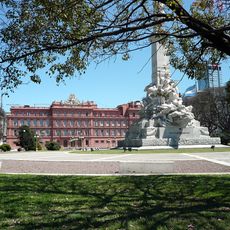
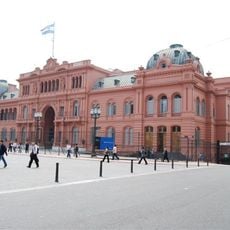
The building is a short walk from Plaza de Mayo, making it easy to combine with nearby landmarks during a visit to the area. As it remains an active government facility, access to the interior is generally not available to the public.
The customs bureau housed here traces its origins to the 1852 San Nicolás Agreement, which nationalized customs duties; the province of Buenos Aires rejected it, and it was only enforced after Bartolomé Mitre's 1860 defeat at Cepeda. From the colonial era until 1930, customs duties supplied around 80 percent of government revenue.
The community of curious travelers
AroundUs brings together thousands of curated places, local tips, and hidden gems, enriched daily by 92,633 contributors worldwide.