Salinas Grandes, Salt flat in central Argentina
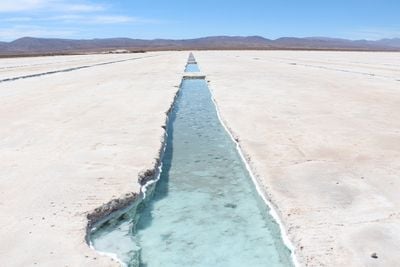
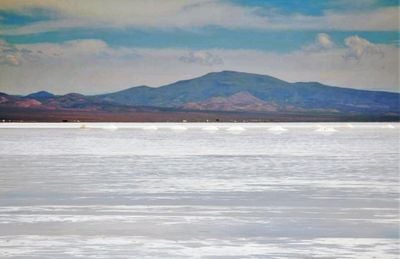
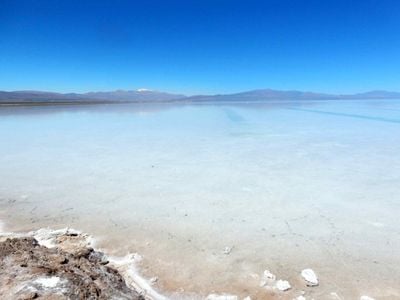
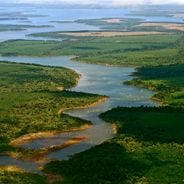
Salinas Grandes is a salt flat of about 6,000 square kilometres spanning the borders of Córdoba, Catamarca, La Rioja and Santiago del Estero in central-northwestern Argentina, at 150 to 210 metres above sea level. It forms the core of an endorheic basin draining the Sierras de Córdoba and other surrounding ranges. A straight channel of pale turquoise water runs through a shallow trench cut into the white salt crust, which is divided into large rectangular sections by faint lines.
The salt flat lies on a northeast–southwest tectonic fault, linked to the same reactivated fault system as the great Mar Chiquita lagoon, which exposes the bed of an ancient sea floor. Unlike Mar Chiquita, the area receives too little regular water to form a lake, so sporadic streams such as the Río Soto evaporate and leave a nearly crystallised crust of sodium chloride, sodium sulphate, potassium and, in smaller amounts, borax. Until the mid-nineteenth century the expanse was called the Desierto de las Salinas.
Local communities across four provinces have extracted salt using traditional techniques passed through generations, shaping regional economies and cultural identity. These methods form an essential part of daily life, providing income and resources for households and small businesses. The extraction process continues to define relationships between residents and their natural environment across this arid landscape.
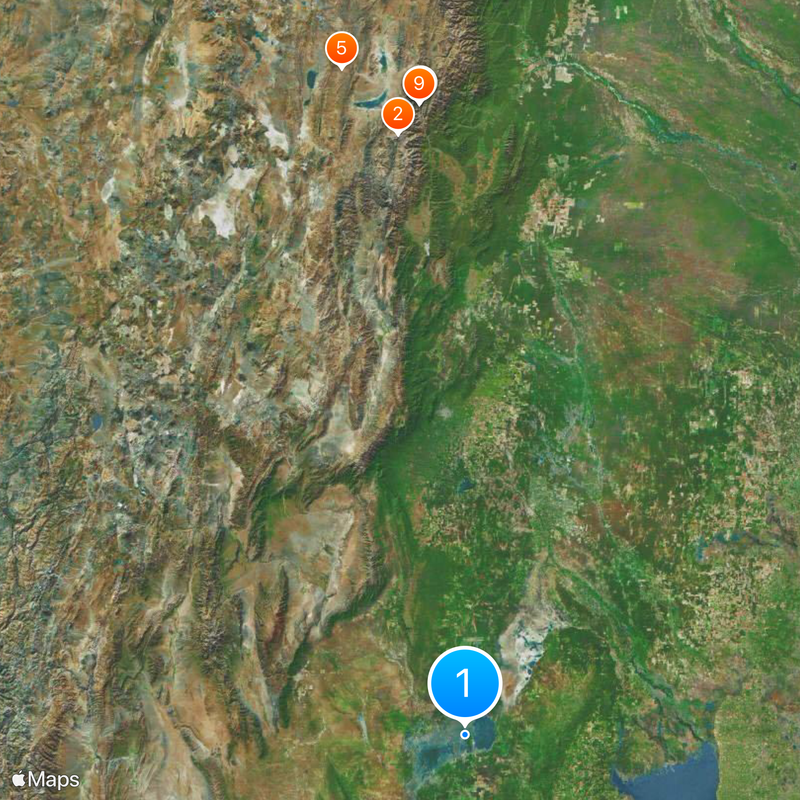
The salt flat lies in the centre-northwest of Argentina, spread over Córdoba, Catamarca, La Rioja and Santiago del Estero, at 150–210 m above sea level. Summer temperatures easily exceed 45 °C, so wear dark glasses with UV filters, cover exposed skin with sunscreen and carry plenty of water. In the Córdoba sector, the Reserva de Uso Múltiple Salinas Grandes and the Monte de las Barrancas woodland reserve protect part of the area.
The salt crust yields sodium chloride, sodium sulfate, potassium and, in smaller amounts, borax, formed by sedimentation and evaporation of mineral-laden rain and river water. In the Córdoba sector, a 190,000-hectare multiple-use reserve created in the late 20th century contains the wooded Monte de las Barrancas oasis. Adding the nearby Salinas de Ambargasta, San Bernardo and La Antigua, the total reaches about 30,000 km², the largest salt-flat area on the planet.
The community of curious travelers
AroundUs brings together thousands of curated places, local tips, and hidden gems, enriched daily by 92,634 contributors worldwide.