Bicentennial Cultural Center, Cultural center in Santiago del Estero, Argentina
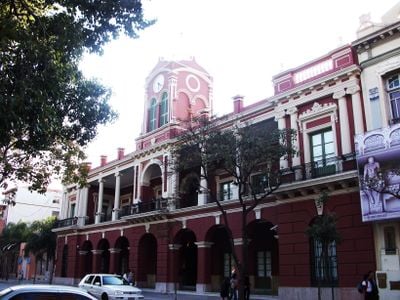
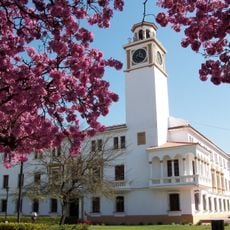
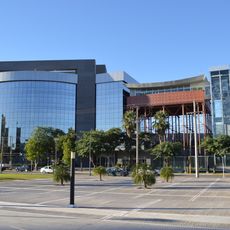
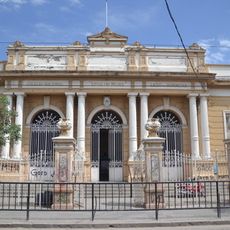
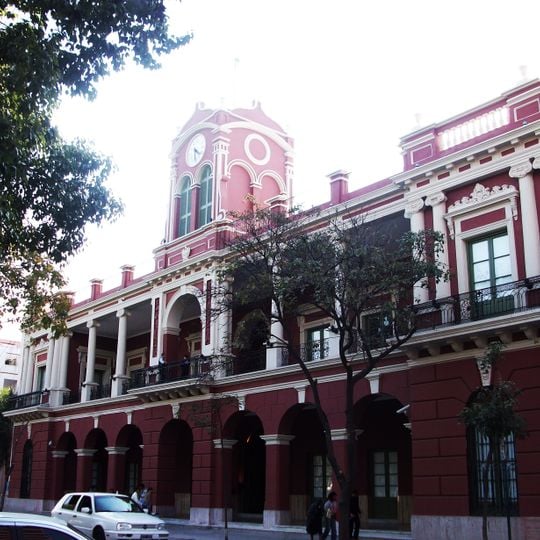
The Bicentennial Cultural Center occupies the former Santiago del Estero provincial government house, a French neoclassical building from 1868 by the Swiss brothers Agustín and Nicolás Cánepa, with Ionic capitals on the upper floor and a clock tower rebuilt during the 2008–2010 restoration. Behind it stands a 7,500 m² annex whose glazed barrel vault rises 15 m above a large ground-floor patio holding a fountain moved from Plaza Libertad.
The center was built to commemorate the 200th anniversary of the May Revolution of 1810, a pivotal moment in Argentine independence. It represents the connection between this historic legacy and contemporary cultural development in the region.
The center provides exhibition space for local and regional artists to display their work in dedicated halls. It serves as a gathering place where the community engages with contemporary and traditional art throughout the year.
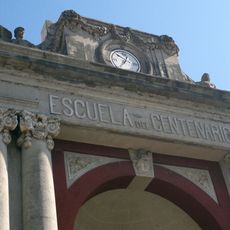
Two entrances open onto Tucumán and Pellegrini streets and meet in the central hall; from there escalators and lifts lead to the exhibition rooms, the auditorium and the bar-restaurant. The Tucumán pedestrian access is a replica of the Portico of the Colegio de San Jerónimo in Santiago de Compostela. The new rear building has a glazed barrel vault 15 m high.
The building is popularly known as the Cabildo, though Santiago del Estero's real Cabildo stood a few metres east, at Libertad and Tucumán, and was demolished before the Cánepa brothers began work in 1866. The old water fountain in the ground-floor patio came from Plaza Libertad.
The community of curious travelers
AroundUs brings together thousands of curated places, local tips, and hidden gems, enriched daily by 92,686 contributors worldwide.