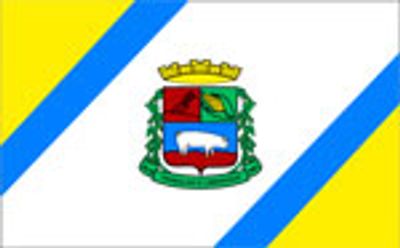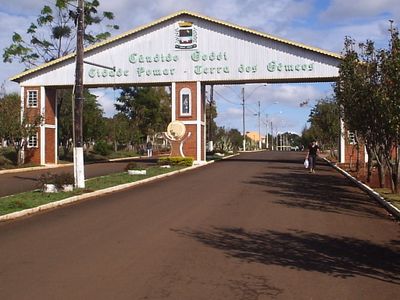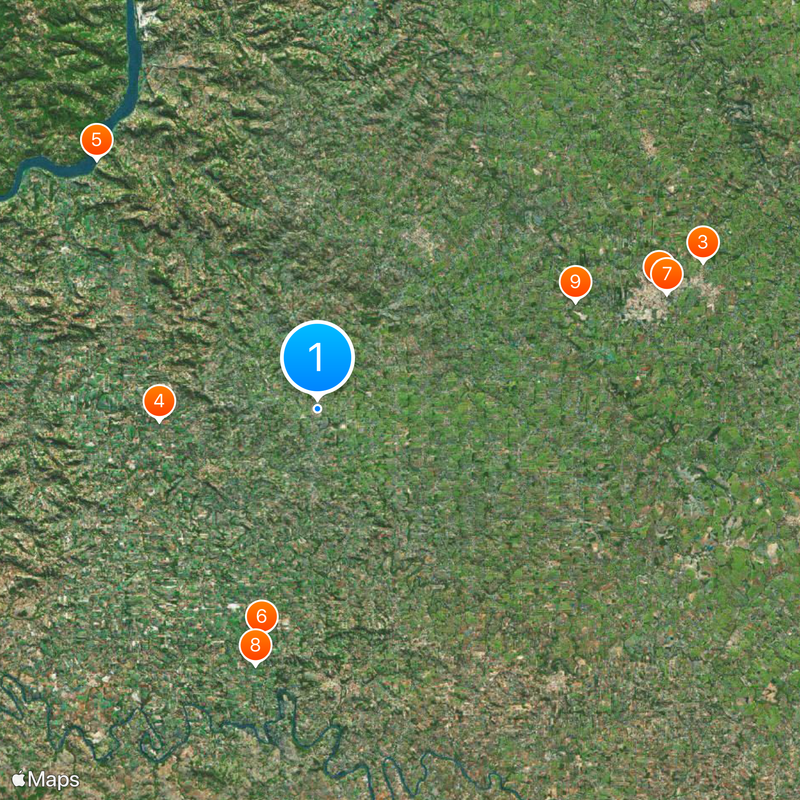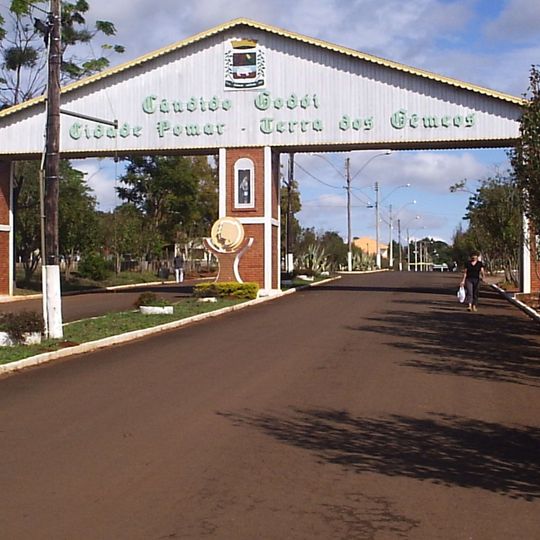
Cândido Godói, Agricultural municipality in Rio Grande do Sul, Brazil
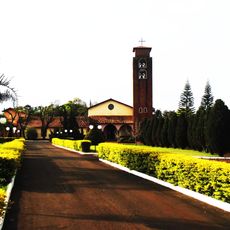
Cândido Godói is a municipality in southern Rio Grande do Sul near the Argentine border. The region is organized around agricultural activity and settlements where farming families have established their homes.
German-speaking immigrants arrived in the early 1900s and established settlements across the region. The municipality was officially founded in 1963, marking the consolidation of these pioneer communities into a formal administrative entity.
Residents speak a German dialect inherited from settlers who came from the Hunsrück region, and this language choice shapes how the community communicates today. Local customs and family traditions reflect these central European roots.
The area is sparsely populated with farms spread across the landscape, so distances between settlements can be significant. Visitors should plan for personal transportation and expect to find larger services in nearby urban centers.
The area has an unusually high occurrence of twin births concentrated in particular family lines, which has drawn attention from genetic researchers over many years. Scientists continue to study this phenomenon to understand the underlying hereditary factors at play.
The community of curious travelers
AroundUs brings together thousands of curated places, local tips, and hidden gems, enriched daily by 60,000 contributors worldwide.