Salar de Atacama, Salt flat in Atacama Desert, Chile
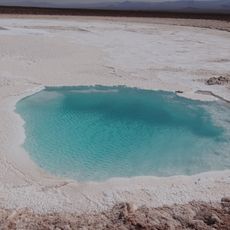
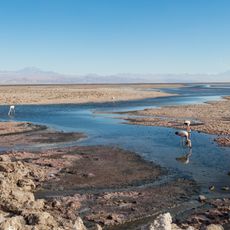
The Salar de Atacama is a salt flat of about 3,000 km² at roughly 2,300 m elevation, about 100 km long and 80 km wide, making it the third largest in the world after Salar de Uyuni and Salinas Grandes. Its core is unusually rough, with jagged salt mounds and raised ridges formed by evaporation and ephemeral surface water, and shallow pools lying among the crust. The Andes enclose it to the east and the Cordillera de Domeyko to the west.
The Likan Antay are the indigenous inhabitants of the salt flat and its surroundings. Systematic surveys of its mineral resources began in the 1960s with Chilean and American studies funded by a United Nations grant. In 1962 the Anaconda Company found lithium in the brines while drilling for freshwater for its copper mines, and from the 2000s extraction expanded.
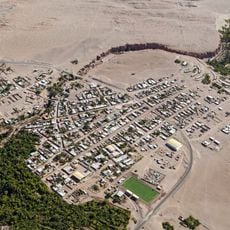
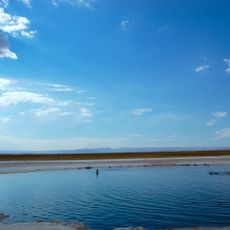
Local Atacameño communities have long adapted to these extreme conditions, using the salt lagoons for traditional practices. The white salt fields shape how people understand and relate to the region.
Visitors need a vehicle or organized tour from San Pedro de Atacama to reach this remote location. A local guide helps navigate the terrain and find the most interesting spots.
This salt flat holds one of the world's largest concentrations of lithium, an element essential for modern batteries. This fact makes it a crucial location for global technology supply.
The community of curious travelers
AroundUs brings together thousands of curated places, local tips, and hidden gems, enriched daily by 93,687 contributors worldwide.