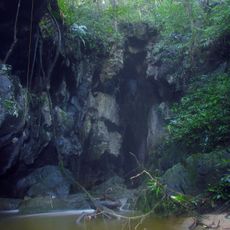
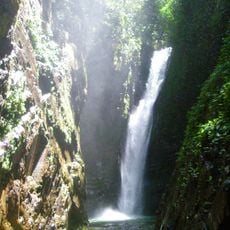
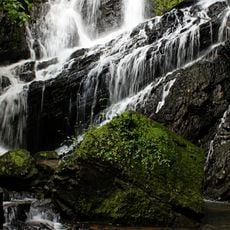
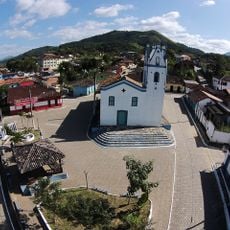
Caverna de Santana, Limestone cave in Alto Ribeira State Park, Brazil
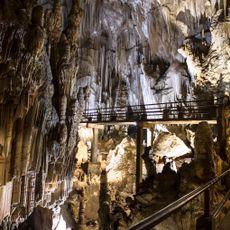
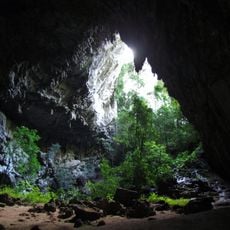
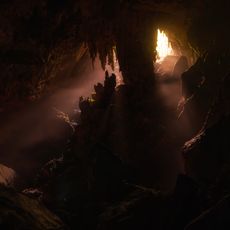
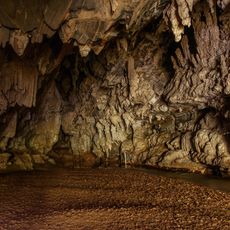
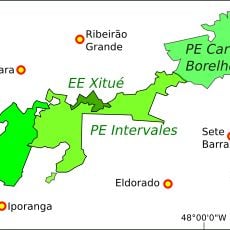
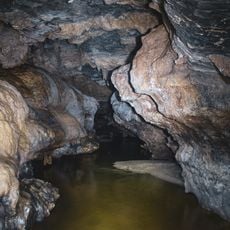
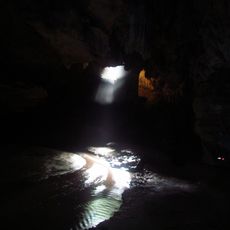
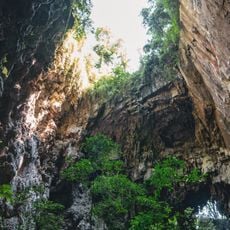
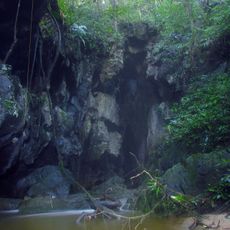
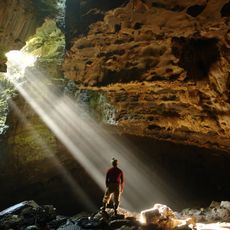
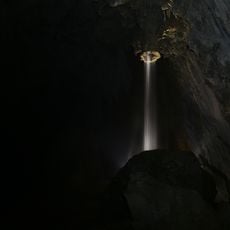
Caverna de Santana (SP-041) lies in PETAR along the Apiaí–Iporanga road in Iporanga, São Paulo. Its 495 m visitor circuit is a closed loop with branches, fitted with walkways, bridges and stairs. The route passes halls of stalactites, stalagmites, curtains, travertine dams and helictites, plus levels cut by the former course of the Roncador river.
The cave was discovered in the early 1900s by German naturalist Richard Krone, who initially named it after the river system nearby. Over time, it became known by its current name and developed into an important location for geological study and exploration.
The cave's name honors Sant'Anna, and its halls carry popular nicknames like "cavalo" (horse), "pata de elefante" (elephant's foot), "bolo de noiva" (wedding cake), "coração" (heart) and "peru" (turkey). The Fafá Hall was one of the locations where Hermeto Pascoal filmed part of the documentary "Sinfonia do Alto Ribeira".
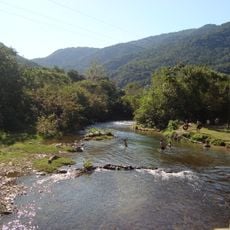
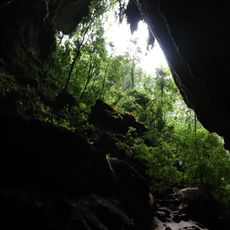
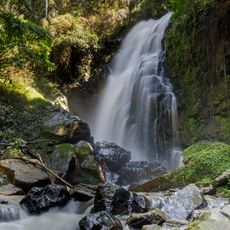
The visitable route is a 495-metre closed circuit with side branches, fitted with walkways, bridges and stairs; the cave lies along the Apiaí–Iporanga road. The Roncador and Furnas rivers meet just outside the entrance, where the terrace is paved and bare of vegetation. Upper galleries such as Taqueupa, das Flores and do Disco are closed for conservation.
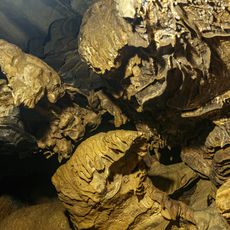
The Flowers Hall section contains thousands of aragonite crystal formations that resemble delicate sculptural works. These fine crystal structures develop through mineral-rich water and are rarely seen in such abundance anywhere else.
The community of curious travelers
AroundUs brings together thousands of curated places, local tips, and hidden gems, enriched daily by 92,811 contributors worldwide.