Corumbataí-Botucatu-Tejupá Environmental Protection Area, Environmental Protection Area in the state of São Paulo, Brazil
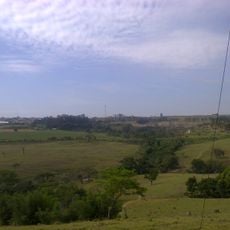
The Corumbataí-Botucatu-Tejupá Environmental Protection Area is a state conservation unit in São Paulo created in 1983 and informally called APA das Cuestas. It is divided into three perimeters that function as separate units: Corumbataí, covering parts of 15 municipalities; Botucatu, covering 9; and Tejupá, covering 10. It protects the Basaltic Cuestas escarpments, testimonial hills such as the Morro do Cuscuzeiro, regional flora and fauna, the Guarani Aquifer and the region's cultural heritage.
The protection area was officially established in 1983 to safeguard the volcanic rock formations and biodiversity of the region. Since then, government authorities and local groups have worked together to maintain the space and preserve its ecological importance for the future.
The area's informal name, APA das Cuestas, comes from the basaltic escarpments it was created to protect. Its stated aims also cover the Guarani Aquifer and the region's cultural heritage, alongside the Morro do Cuscuzeiro, one of the testimonial hills of the local landforms.
The area is split into three separate perimeters: Corumbataí (15 municipalities), Botucatu (9) and Tejupá (10). Only the Botucatu perimeter has a management plan, drawn up in 2011; the other two have none, so check access and rules with the relevant municipality before setting out. The western part of the Corumbataí perimeter overlaps the Piracicaba and Juqueri-Mirim Rivers APA, Area I.
A major underground aquifer called the Guarani lies beneath the protected area, supplying clean water to the region and making water protection as important as the visible landscape. This hidden resource shows how conservation here benefits communities far beyond those who walk its trails.
The community of curious travelers
AroundUs brings together thousands of curated places, local tips, and hidden gems, enriched daily by 94,399 contributors worldwide.