House and Chapel at Sítio de Santo António, Colonial farmhouse and chapel in São Roque, Brazil
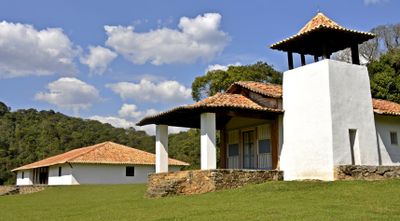
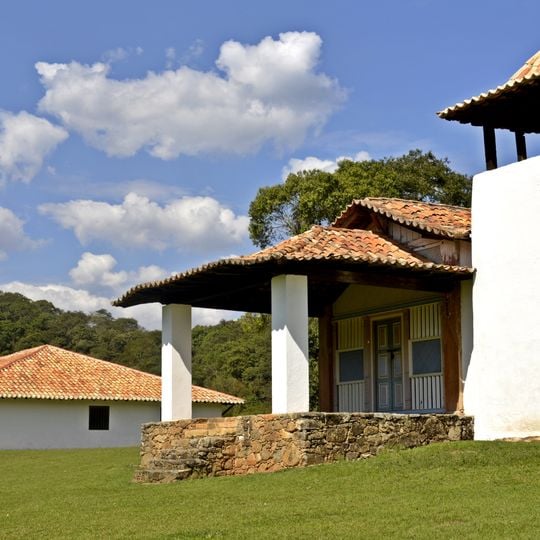
The house and chapel at Sítio de Santo António is a colonial farmhouse with thick rammed earth walls and stone foundations containing three distinct residential sections. A separate chapel stands on the property as an integral part of the architectural complex.
The casa-grande was built around 1640 by the bandeirante Fernão Paes de Barros on land given by his father, Fernão Vaz de Barros. In 1682, at the insistence of his wife Maria Mendonça, the separate chapel was built 30 metres from the house. In the 19th century the estate belonged to Antônio Joaquim Rosa, baron of Piratininga, and in 1937 Mário de Andrade bought it and later donated it to IPHAN.
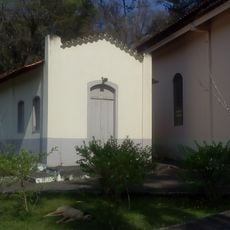
The chapel's facade is entirely of wood, its trellises and railings creating a play of light, and it survives today. Its plan follows Jesuit chapel models rather than the era's usual church layouts, with nave and main altar in one body. The altar boards were reconstituted in 1965.
The site lies 8 km from São Roque's centre, reached by a paved road, with alternative routes for those who prefer them. Guided visits accompany the house and chapel, and the guides explain the history of the estate. The grounds hold lawns, lakes and native forest, and the complex is part of the Roteiro Taypa de Pilão and Roteiro dos Bandeirantes itineraries.
Mário de Andrade, then working at SPHAN, bought the site in 1937 and wrote that he would give the chapel and casa-grande to Brazil upon his death; the donation to IPHAN followed. The chapel's facade is entirely of wood, its trellises and railings creating a play of light that survives today.
The community of curious travelers
AroundUs brings together thousands of curated places, local tips, and hidden gems, enriched daily by 94,032 contributors worldwide.