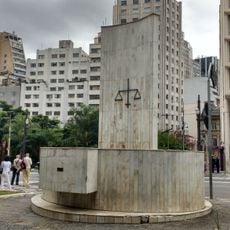
Viaduto Dona Paulina, Transportation bridge in República district, São Paulo, Brazil.
The Viaduto Dona Paulina is a concrete bridge that connects two central areas of São Paulo by spanning above street level. The structure features a modernist design from the mid-20th century with multiple spans and serves primarily as a traffic thoroughfare.
The bridge opened in 1948 and was named after a philanthropist known for children's welfare work in the 1800s. It was built as part of São Paulo's infrastructure expansion during the city's rapid growth period.
The viaduct is a landmark in daily city life where residents and commuters pass through regularly as part of their routines. The structure shapes how people move through the central districts and remains embedded in local navigation patterns.
The viaduct experiences heavy traffic during daytime hours and is best crossed during early morning or late evening when congestion is lighter. For pedestrians, the environment is dominated by vehicles and offers limited walking space.
The area beneath and around the viaduct once housed judicial institutions that later moved to other parts of the city. This chapter as an administrative and legal hub is largely invisible today since the location has become purely a traffic junction.
The community of curious travelers
AroundUs brings together thousands of curated places, local tips, and hidden gems, enriched daily by 91,984 contributors worldwide.