Estádio da Gávea, Football stadium in Gávea, Rio de Janeiro, Brazil
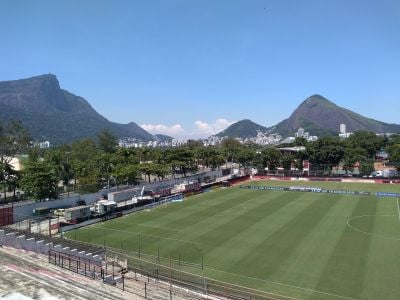
Estádio da Gávea, officially Estádio José Bastos Padilha, is a football ground in the Lagoa neighborhood of Rio de Janeiro, near the Leblon and Gávea borders. Its grandstand has tiers of white seats split by red-painted stepped aisles, a dark flat roof over the top row, and a painted shield with black and red stripes and a white band reading "CRF". A white goal frame stands on the grass.
Flamengo secured the Lagoa site on 4 November 1931, and president José Bastos Padilha began construction on 28 December 1933; the stadium was inaugurated on 4 September 1938, when Vasco beat Flamengo 2-0 and Niginho scored the first goal. The ground is named after Padilha, club president from 1933 to 1937. The field was renovated in December 2000.
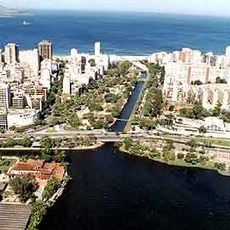
The stadium's nickname comes from the old Freguesia da Gávea district where its land lay, though it stands in Lagoa. The 1941 Fla-Flu da Lagoa entered club lore: Fluminense players kicked balls toward Rodrigo de Freitas Lagoon to waste time, and Flamengo rowers took to the water to retrieve them.
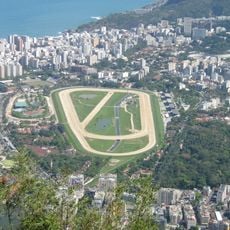
The stadium stands at Avenida Borges de Medeiros 997, in Lagoa, near the Leblon and Gávea boundaries, beside the club's social headquarters. Flamengo rarely plays first-team matches here, using it mainly for youth and women's teams, so check which team is playing before travelling.
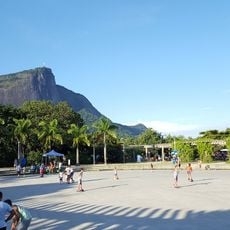
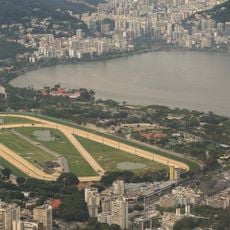
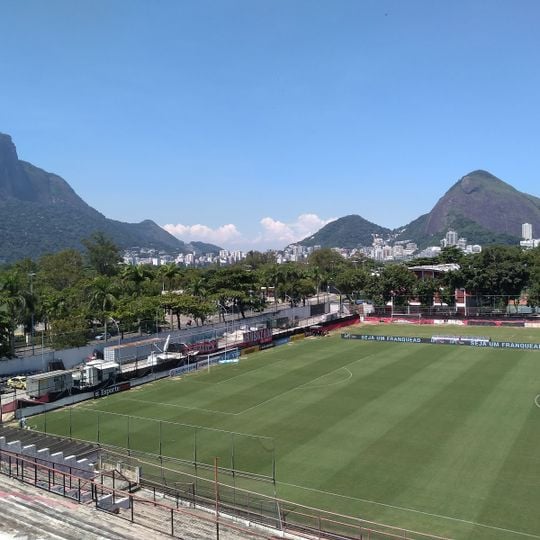
The grounds offer views of Rio's mountains and sit near Rodrigo de Freitas Lagoon in the upscale Gávea neighborhood. This combination places a major sports venue within reach of water and natural surroundings that most city stadiums lack.
The community of curious travelers
AroundUs brings together thousands of curated places, local tips, and hidden gems, enriched daily by 94,043 contributors worldwide.