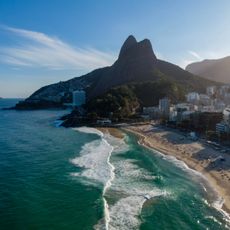
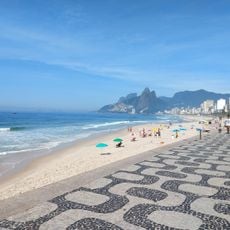
Jardim de Alá, Urban park between Ipanema and Leblon, Rio de Janeiro, Brazil.
Jardim de Alá is a park laid out in 1938 on an Art Deco plan by David Xavier de Azambuja, after Alfred Agache's design for the Calabouço gardens. It flanks a canal dug in the early 1920s between Lagoa Rodrigo de Freitas and the Atlantic, with docks for boarding. Two squares, Almirante Saldanha da Gama near the beach and Grécia by the lagoon, hold almond, abricó-da-praia and sibipiruna trees.
The canal was constructed in the 1920s under Mayor Carlos Sampaio to improve water renewal in Lagoa Rodrigo de Freitas and reduce flooding in the surrounding area. This infrastructure project reshaped the geography and enabled better drainage across the region.
The park's name comes from the 1936 American film The Garden of Allah, starring Marlene Dietrich and Charles Boyer, released two years before the garden opened. Its French-inspired Art Deco layout, reinterpreted by David Xavier de Azambuja from Alfredo Agache's design, includes romantic pergolas and many benches. Among the monuments are an obelisk for the Battle of Riachuelo, a bust of Marshal Eurico Gaspar Dutra, and the sculptures Proteção and Mulher e Felino.
The park remains accessible throughout the day and offers space for walking, jogging, or simply spending time beneath almond and sibipiruna trees. Early morning is best if you prefer quieter paths where tai chi practitioners and dog owners move about.
A stone slab from 1922 near the beach marks the construction period and bears the names of President Epitácio Pessoa and Engineer Saturnino de Brito. This modest marker reveals who was behind one of Rio's major transformations.
The community of curious travelers
AroundUs brings together thousands of curated places, local tips, and hidden gems, enriched daily by 93,631 contributors worldwide.