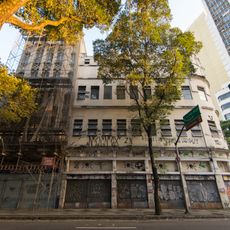
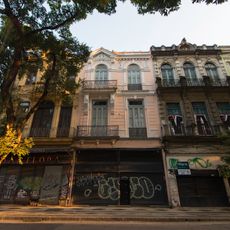
Museu do Negro, Black history and religious museum in Centro, Rio de Janeiro, Brazil
The Museu do Negro occupies part of the second floor of the 18th-century Church of Nossa Senhora do Rosário e São Benedito dos Homens Pretos on Rua Uruguaiana, in Rio de Janeiro's Centro. Its rooms hold sculptures, photographs, liturgical vestments of the brotherhood, Candomblé cult objects, plantation-donated paintings and a 1572 Luís de Camões manuscript.
The museum occupies part of the second floor of the 18th-century Church of Nossa Senhora do Rosário e São Benedito dos Homens Pretos on Rua Uruguaiana. That church served as a refuge for escaped slaves, who brought with them the instruments of torture they had endured. After a 1967 fire disfigured the church and destroyed part of the collection, the Brotherhood of Our Lady of the Rosary and Saint Benedict of Black Men created the museum, officially founded in 1969.
The place reflects the connection between African and Brazilian spiritual beliefs through its collection of religious objects from Catholic and Candomblé traditions. Visitors can see how these two spiritual worlds intertwine in the objects on display and their arrangement.
The museum occupies part of the second floor of the Church of Nossa Senhora do Rosário e São Benedito dos Homens Pretos, on Rua Uruguaiana in the Centro of Rio de Janeiro. Access is via the church, so look for the entrance on that street and go up to the upper level.
The devotion to Escrava Anastácia began at this museum, inspired by a painting in its collection. The museum also holds a 1572 manuscript by Luís de Camões, donated along with paintings and objects from former plantation owners.
The community of curious travelers
AroundUs brings together thousands of curated places, local tips, and hidden gems, enriched daily by 93,717 contributors worldwide.