Museu Casa da Hera, Historical mansion museum in Vassouras, Brazil
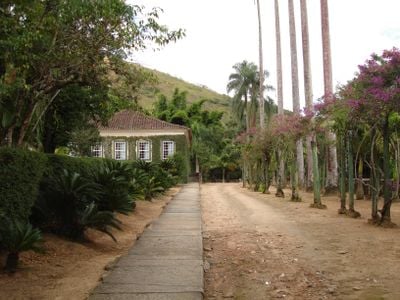
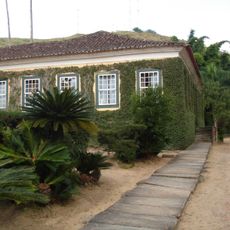
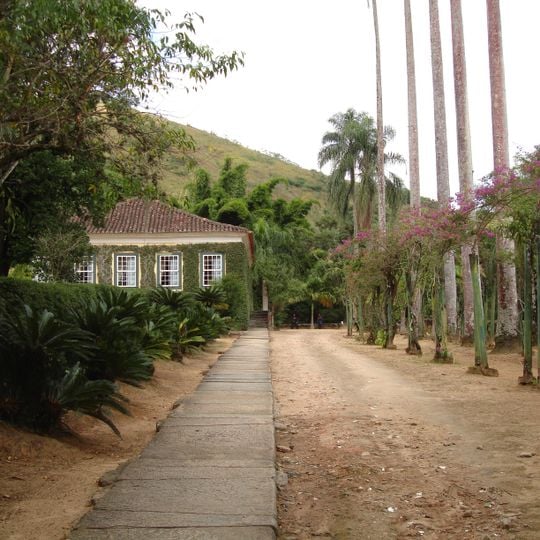
Museu Casa da Hera is a single-storey mansion in central Vassouras whose adobe and wattle-and-daub walls are clad in ivy planted in 1897. Its green facade with white trim holds four tall multi-paned windows, and the hipped roof of dark reddish-brown tiles has a chimney near the left end. Inside are 22 rooms in four zones and 69 sash windows.
The exact construction date is unknown, but a town plan of Vassouras from 1836 already shows the house. Joaquim José Teixeira Leite, a leading coffee commissioner and son of the baron of Itambé, acquired it around 1840 before his 1843 marriage to Ana Esméria Pontes França. His daughter Eufrásia, the last owner, died in 1930 and left the estate to a religious institute; it was listed by the national heritage body in 1952.
The house keeps its original 19th-century furniture and interior treatment, the only residence in the Paraíba valley to do so. Social rooms hold French wallpaper; the red salon, music room and dining room are the richest. The name comes from the ivy planted in 1897 by caretaker Manuel da Silva Rebelo.
The house stands on a hill about 300 metres from Praça Barão de Campo Belo, in the historic centre of Vassouras. The grounds cover 33,000 square metres, with a bamboo tunnel known as the Túnel do Amor and imperial palms. The only change made since the 19th century is a former sewing room converted into toilets for visitors.
The exterior walls have been covered with ivy since 1897, giving the entire structure a green appearance and explaining the museum's name. This long-standing planting has shaped the building's character for over a century.
The community of curious travelers
AroundUs brings together thousands of curated places, local tips, and hidden gems, enriched daily by 93,860 contributors worldwide.