Desengano State Park, State park in northern Rio de Janeiro, Brazil.
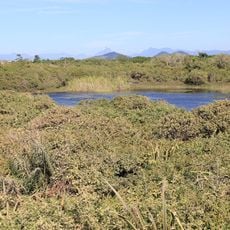
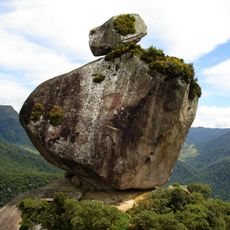
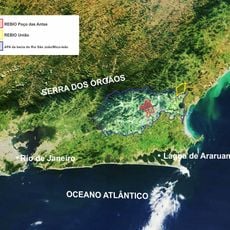
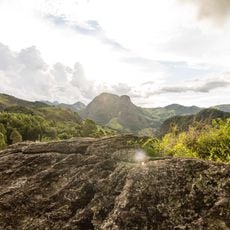
Desengano State Park covers 21,444 hectares across Santa Maria Madalena, São Fidélis and Campos dos Goytacazes, from 200 m up to the 1,761 m Pico do Desengano. Its terrain of ridges, pointed peaks and scarps with slopes up to 75 degrees holds the last continuous Atlantic Forest remnant in the region, with dense submontane rainforest up to 500 m, montane rainforest to 1,500 m and alpine meadows above 1,600 m.
Desengano State Park was created on 13 April 1970 by decree-law 250, making it the oldest conservation unit in Rio de Janeiro state. State decree 7.121 of 28 December 1983, republished in January 1984, established an environmental protection area around it. The park is managed by the State Environmental Institute (Inea), which curbs hunting and logging: in 2015 rangers seized 35 birds and a shotgun at Monte Café.
The park's name comes from Pico do Desengano, its highest point at 1,761 metres. In 2021 it became the first place in Latin America to receive Dark Sky Park status, recognising the quality of its night sky for stargazing. The muriqui-do-norte, the largest primate in the Americas, was recorded here in July 1999, which drew interest from researchers in Brazil and abroad.
The park has marked hiking trails with set entry points, and some lead to waterfalls such as Vernec and Bonita. Trails vary a lot in difficulty, so checking what each one involves before you set out will help you choose the right one for your pace.
In July 1999 researchers recorded the highly endangered northern muriqui, the largest primate of the Americas, in the park; the sighting drew interest from the national and international scientific community and stimulated investment in research and conservation. The species had been proposed as a candidate mascot for the 2016 Olympics.
The community of curious travelers
AroundUs brings together thousands of curated places, local tips, and hidden gems, enriched daily by 92,810 contributors worldwide.