Restinga de Jurubatiba National Park, National park in Macaé, Brazil.
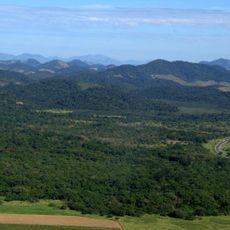
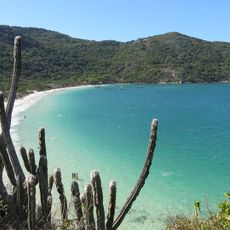
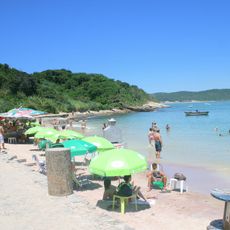
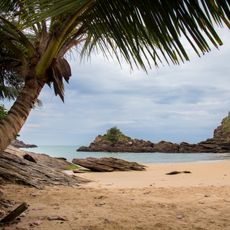
Restinga de Jurubatiba National Park is a coastal conservation area in Macaé that stretches along the northeastern shore of Rio de Janeiro state and features multiple saltwater lagoons. The park consists of sandy beaches, shallow lagoon waters, and vegetated dunes that form a flat coastal landscape with distinct ecosystems.
The park was created on 29 April 1998, the first national park in Brazil covering only restinga sandbank vegetation. The Campos-Macaé canal, an artificial waterway built in the mid-19th century, crosses the park: it runs from Quissamã through the Arrozal marsh into Lagoa Paulista, then past the Carapebus and Cabiúnas lagoons to the mouth of the Macaé River. Unused for commercial navigation since 1863, it is now silted and eutrophic in much of the park.
The name Jurubatiba comes from Tupi: jeri'wa (jeribá palm) plus tyba (gathering), meaning "gathering of jeribás". Local residents often call narrow, elongated lagoons or their stretched sections "rivers". The Campos-Macaé canal, dug in the mid-19th century, crosses the Paulista, Carapebus and Cabiúnas lagoons before reaching the Macaé river.
The park is easy to walk through thanks to its flat terrain, and visitors can explore the lagoons and beaches on foot. It is best to bring water and sun protection, as there is little shade and the sun exposure is strong throughout the day.
The lagoon waters shift in color depending on the season and water source, creating surprising visual changes. These color shifts happen naturally due to salt content and rainfall patterns rather than any human intervention.
The community of curious travelers
AroundUs brings together thousands of curated places, local tips, and hidden gems, enriched daily by 94,733 contributors worldwide.