Caixa D'Água Velha Museum, Historical museum in Cuiabá, Brazil
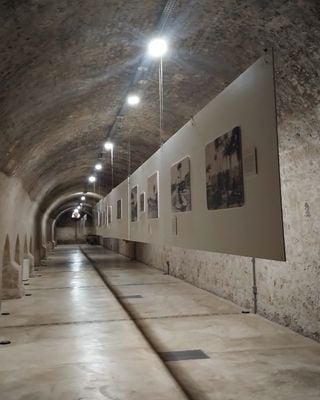
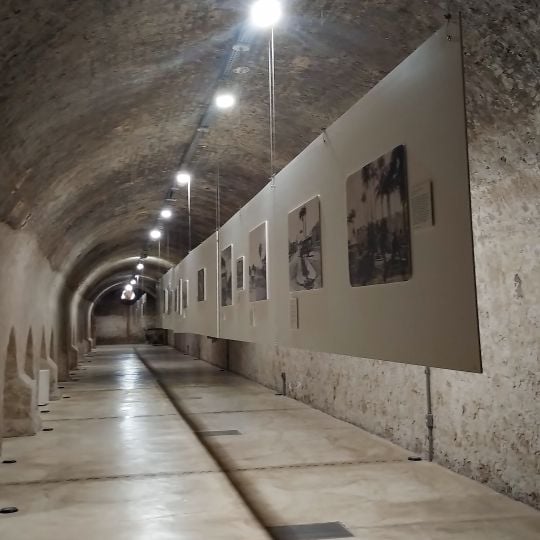
Museu do Morro da Caixa D'Água Velha occupies a former water reservoir built by Colonel José Maria de Alencastro and completed in November 1882. Its interior holds three halls of about 13 by 45 metres each, and the old aqueduct that stored 1.2 million litres forms the core of the museum. The upper level was adapted into extra exhibition space.
The structure was built in 1882 by Colonel José Maria de Alencastro to meet the city's needs for over a century. It was eventually decommissioned after 1940 when modern water systems replaced the older infrastructure.
The space shows how the city gradually developed its water systems and what role this building played in serving the community. The photographs and artifacts on display reveal the technical solutions that shaped the daily lives of residents.
The museum is easily accessible and offers guided tours through the historic spaces along with rotating art exhibitions. Visitors should allow time to walk through the long halls and read the informational displays about the water systems.
The water was drawn from the Rio Cuiabá at the Hidráulica do Porto, powered by a steam engine, then fed by gravity through cast-iron pipes to fountains in the city centre. Residents collected it in barrels, carts, wheelbarrows or buckets, and some carried it on their shoulders or heads; for many this was their main income.
The community of curious travelers
AroundUs brings together thousands of curated places, local tips, and hidden gems, enriched daily by 92,793 contributors worldwide.