Boa Nova National Park, Nature reserve in Manoel Vitorino, Brazil.
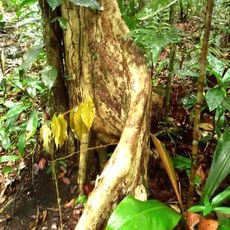
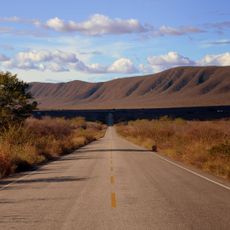
Boa Nova National Park is a federal protected area of 12,065.31 hectares spanning Boa Nova, Dário Meira and Manoel Vitorino in Bahia. Its rugged terrain rises from 440 to 1,111 metres and drains into the Uruba River, a tributary of the Gongogi. Four vegetation types meet here: caatinga, semi-deciduous submontane forest, montane rainforest and semi-deciduous lowland forest.
Boa Nova National Park was created by decree on 11 June 2010, together with the adjoining Boa Nova Wildlife Refuge. It is administered by the Chico Mendes Institute for Biodiversity Conservation and is classed as IUCN protected area category II. In 2002 the Central Atlantic Forest Ecological Corridor was created, and the park later became part of it.
The park's birdlife draws foreign birdwatchers, who come for species such as the slender antbird (Rhopornis ardesiacus), the Bahia spinetail and the Bahia tyrannulet, all endemic to this Atlantic Forest–Caatinga transition. The reserve also borders the Boa Nova Wildlife Refuge, created by the same 2010 decree, and forms part of the Central Atlantic Forest Ecological Corridor established in 2002.
The park lies in the municipalities of Boa Nova, Dário Meira and Manoel Vitorino, and its terrain rises from 440 to 1,111 metres, so expect steep, uneven ground. Rain averages 1,300 mm a year and temperatures swing between 14 and 26 °C. The adjoining Boa Nova Wildlife Refuge, created by the same 2010 decree, borders the park.
Of the 437 bird species recorded here, three are endemic: the slender antbird (Rhopornis ardesiacus), the Bahia spinetail and the Bahia tyrannulet. The park was created specifically to keep viable populations of these threatened birds in the Atlantic Forest–Caatinga transition.
The community of curious travelers
AroundUs brings together thousands of curated places, local tips, and hidden gems, enriched daily by 94,695 contributors worldwide.