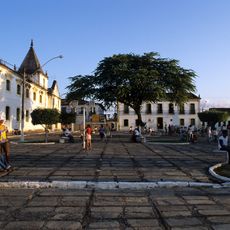
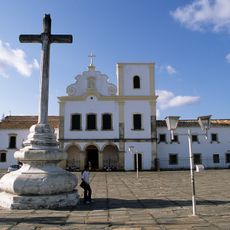
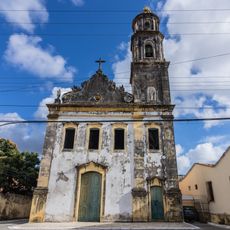
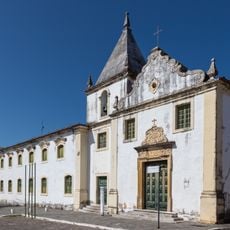
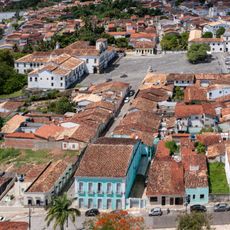
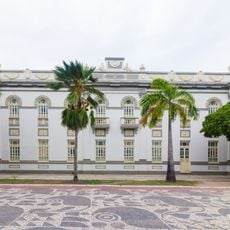
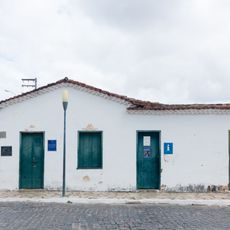
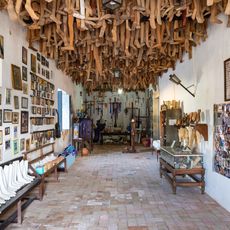
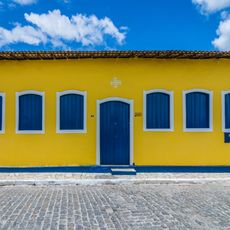
São Francisco Square in the Town of São Cristóvão, UNESCO World Heritage site in São Cristóvão, Brazil.
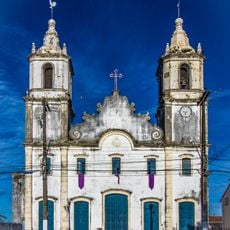
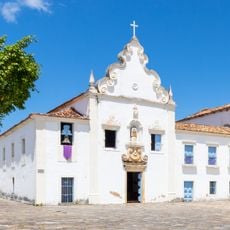
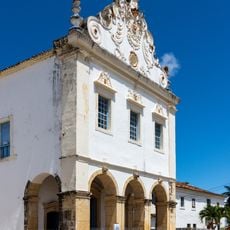
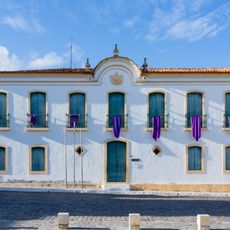
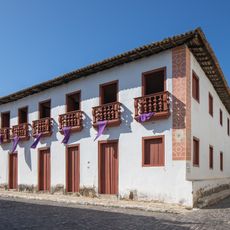
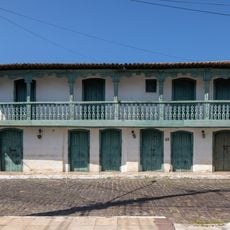
São Francisco Square is a large open area in São Cristóvão surrounded by colonial buildings including São Francisco Church, Provincial Palace, and Misericórdia Church. The ground is paved with stone, and the buildings form a unified architectural frame around the central space.
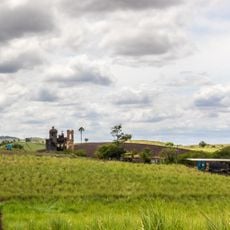
São Cristóvão was founded in 1607 under the Iberian Union, on a site near the Paramopama River 21 km from Aracaju, after earlier locations near the Poxim. Dutch forces invaded in 1636, sacking and burning the town; the Portuguese regained control and rebuilt from 1645. The town then became capital of Sergipe until 1855, when Aracaju took over.
The square's layout follows the Spanish plaza mayor model prescribed by the 1603 Codigo Philippino, while the surrounding urban grid derives from Portuguese colonization. The Church and Convent of São Francisco, authorized in 1657 and begun in 1693, has a cloister with six arches per side and once housed the Treasury. The church projects into the square, and a large stone cross stands before it.
The square is located about 26 kilometers from the city of Aracaju and is easily accessible by road. Accommodations and local guides offering tours are available near the historic buildings, making it convenient for visitors to explore the area.
The stone paving and quadrangular layout follow specific construction methods from the colonial period based on regulations from the 1603 Philippino Code. These particular building standards were widely applied across Portuguese colonies and still shape the square's appearance today.
The community of curious travelers
AroundUs brings together thousands of curated places, local tips, and hidden gems, enriched daily by 92,820 contributors worldwide.