Fort Orange, Colonial fort on Itamaracá Island, Brazil
Forte Orange is a square military structure with four bastions positioned to overlook the harbor entrance on Pernambuco's northern coast. The building combines European defensive architecture with its location on Itamaracá Island's landscape.
Dutch forces built the original wooden structure in 1631 during their colonial expansion, naming it after the House of Orange-Nassau. The fort evolved over time and now stands as evidence of early European presence in Brazil.
The fort's name honours the House of Orange-Nassau, which ruled the Netherlands when the Dutch began the fortification in May 1631. The Portuguese renamed it for the Holy Cross after taking it in 1654. From 1984 to 1992 the ex-convict and craftsman José Amaro de Souza Filho guarded and maintained the monument, funded by sales of local handicrafts.
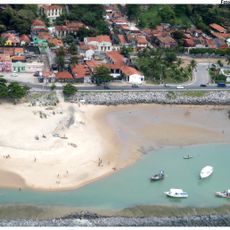
Forte Orange stands on the sandbank at the southern entrance of the Santa Cruz channel, 34 km north of Recife on Itamaracá Island. The sandbank is separated from the mainland by a cove that can be waded at low tide, so check the tide before walking across. The fort was listed in 1938 and its administration passed to the Itamaracá municipal government in 1984.
The fort stands on a sandbank that was once a small island, separated from the mainland by a cove that can be waded at low tide. From 1984 to 1992 the ex-convict and craftsman José Amaro de Souza Filho kept the monument on revenue from selling local handicrafts, and from 1991 his Fort Orange Foundation ran it until 1998.
The community of curious travelers
AroundUs brings together thousands of curated places, local tips, and hidden gems, enriched daily by 94,046 contributors worldwide.