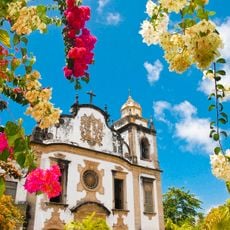
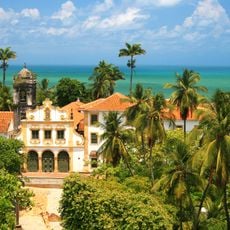
Olinda Cathedral, Colonial cathedral at Alto da Sé, Olinda, Brazil.
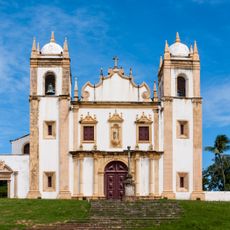
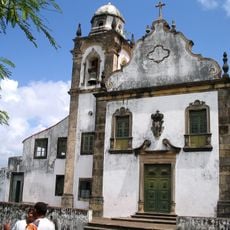
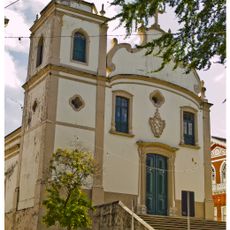
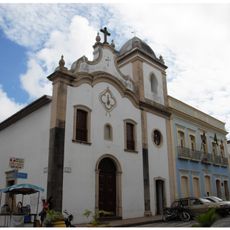
Olinda Cathedral is a Catholic church in Olinda, Pernambuco, the largest 16th-century church in Brazil. Its white-painted masonry facade, stained grey with weathering, is divided into three sections: two identical square bell towers with pyramid-shaped spires and arched belfry openings flank a central body. That body rises to a curved gable with a small circular window above a dark wooden door set in a grey stone portal with a triangular pediment; two smaller wooden doors sit on either side. The church fronts a paved square.
The cathedral was founded in 1540, making it the oldest religious building in Olinda. It was largely destroyed during the Dutch invasion in the 17th century and then rebuilt over the following decades.
The name São Salvador do Mundo, Saviour of the World, was given to the first chapel raised here between 1537 and 1540. Inside, the central nave ceiling is divided into twenty-four painted panels illustrating the Gospel, among them the Flight into Egypt and the exile of Our Lady. In the side chapels survive azulejo panels, gilded carving and old statues; the chancel keeps an episcopal throne and chairs carved in jacaranda, and the tombs of bishops Matias de Figueiredo e Melo, Francisco Xavier Aranha and João da Purificação Marques Perdigão.
The cathedral is easy to reach on foot from the main street of the old town, which leads directly up the hill. Mornings tend to be quieter, making them a good time to look around inside without the presence of large groups.
The cathedral stands on the site of the Castelo de Duarte Coelho, the stronghold of Olinda's founder, which was demolished; nothing of it remains visible today. The present building is the largest 16th-century church in Brazil, and in Pernambuco only the Church of Saints Cosme and Damian in Igarassu is older.
The community of curious travelers
AroundUs brings together thousands of curated places, local tips, and hidden gems, enriched daily by 93,009 contributors worldwide.