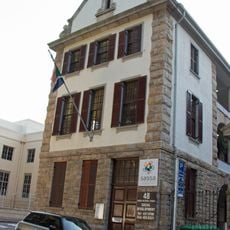
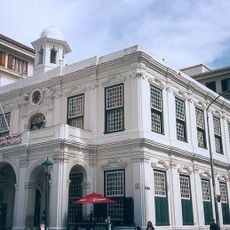
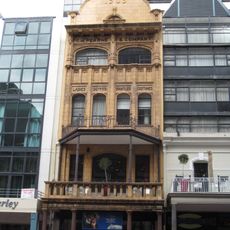
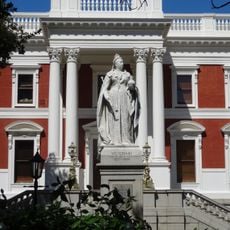
Palm Tree Mosque, Historic mosque on Long Street, Cape Town, South Africa.
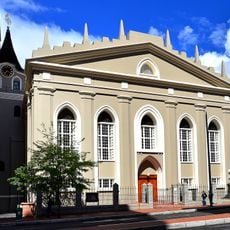
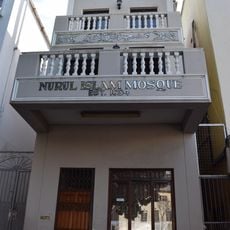
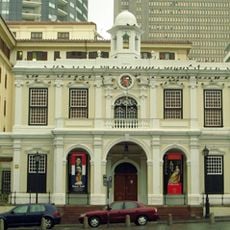
Palm Tree Mosque is a place of worship in central Cape Town featuring traditional Islamic architectural elements and sash windows along its facade. The building has a compact layout designed to serve the religious needs of its congregation.
Carel Lodewijk Schot, bankrupt by 1787, probably built the first residence around 1788. Freed slaves Jan van Bougies and Frans van Bengalen bought it in 1807 after breaking from the Auwal Mosque when Jan failed to become imam; Jan became sole owner in 1811. A second storey was added between 1811 and 1821. When Jan died in 1846, aged 112, he left the house to his wife Samida on condition it remain a mosque, Cape Town's second-oldest.
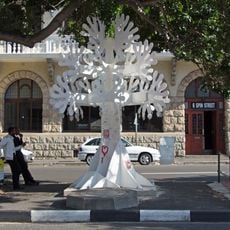
The mosque takes its name from a palm tree that once stood in front of the building and served as a landmark for the local community. Visitors today can observe the simple, functional interior design that reflects its regular use as a place of worship.
The mosque sits on Long Street in the heart of the city and welcomes visitors during daytime hours. Keep in mind it is an active place of worship, so visitors should dress and behave respectfully.
The low windows and short entrance door are an unexpected architectural quirk caused by how the street changed over two centuries. The street level around the building has been raised gradually over time, making the mosque appear sunken into the ground.
The community of curious travelers
AroundUs brings together thousands of curated places, local tips, and hidden gems, enriched daily by 93,011 contributors worldwide.