St. George's Cathedral, Anglican Cathedral in Cape Town, South Africa
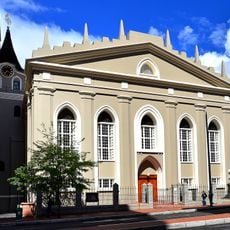
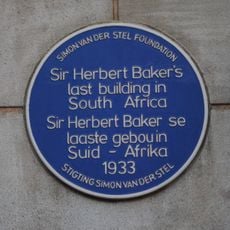
St. George's Cathedral is the Anglican cathedral on Government Avenue at Wale Street in central Cape Town, designed by Sir Herbert Baker in a Neo-Gothic style. Its oldest parts are the choir, with four straight bays and an apse without ambulatory, and the crypt, finished in 1906; the north transept was completed in 1936 and the bell tower only in 1978. The walls carry Gabriel Loire stained glass, including the west window of Christ in Triumph over Darkness and Evil, and the rose window over the south transept.
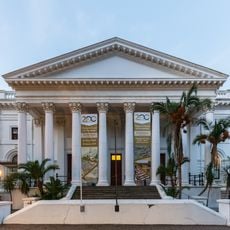
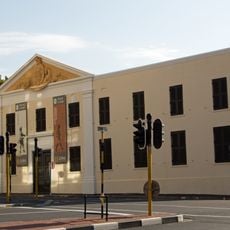
The first St George's church on this site opened on 21 December 1834, built to John Skirrow's Neo-Greek design after Governor Sir Lowry Cole laid its foundation stone on 23 April 1830. In 1847 Robert Gray installed his cathedra here, making it a cathedral. Herbert Baker's replacement was begun with a foundation stone laid on 22 August 1901 by the Duke of Cornwall and York; the north transept was finished in 1936 and the bell tower in 1978.
Known as the "people's cathedral", it was a meeting point for anti-apartheid activists of all races and for women's rights groups. Desmond Tutu, the first black Archbishop of South Africa, led marches against apartheid from its front steps. His remains are interred in front of the high altar, and the crypt houses a jazz restaurant called The Crypt.
The building sits on Wale Street in the city center and is easy to reach on foot. Visitors can attend services, join guided tours, or browse the shop selling books and antiques.
The eight bells cast in 1834 by Mears & Stainbank of Whitechapel were taken down when the old church was demolished in the 1950s, sent back to London and recast in 1963 into today's ring of ten. Before the new tower was finished they hung in a steel frame on the ground outside and were chimed by hand.
The community of curious travelers
AroundUs brings together thousands of curated places, local tips, and hidden gems, enriched daily by 94,276 contributors worldwide.