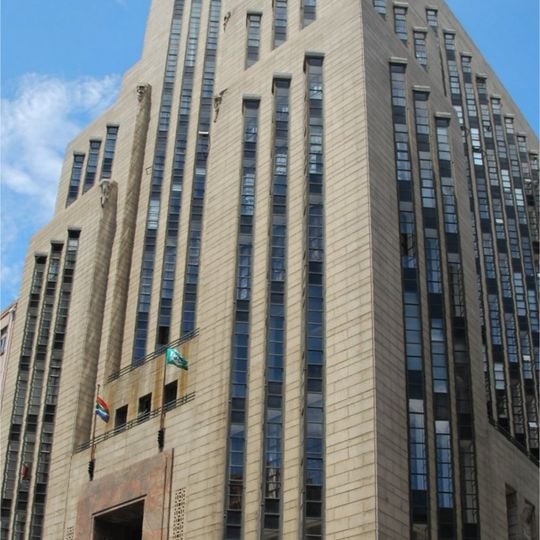
Mutual Building, Art Deco office building in City of Cape Town, South Africa
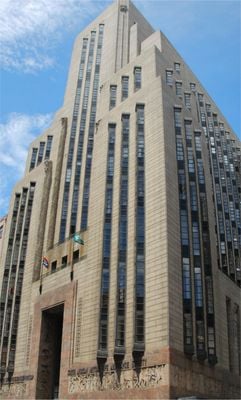
The structure rises twelve floors above street level with granite cladding and prismoid windows. The design follows a ziggurat form along Darling Street. Three basement levels sit below ground. The facade combines vertical lines with horizontal bands typical of late 1930s architecture. The entrance hall retains its original features including marble columns and carved wooden ornamentation. Seven elevators serve all floors of the tower.
Completed in 1939, the structure served as headquarters for South African Mutual Life Assurance Society. Standing 84 meters tall, it was the highest building in Africa at the time of completion. The structure held this position until taller towers were built in other African cities. In 2003, the building converted from office space to residential apartments, fundamentally changing its use and giving it a new function in the city center.
A 386-foot frieze by Ivan Mitford-Barberton runs along the facade, showing scenes from South African history including European settlement and slave emancipation. The artwork reflects official historical narratives of the late 1930s and documents the society's self-perception at that time. The representation illustrates how public buildings were used to convey collective narratives. The structure served as headquarters for one of the country's largest insurance companies.
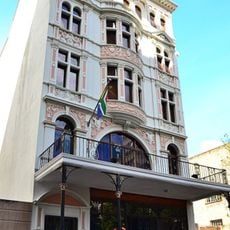
The building stands at the corner of Darling Street and Adderley Street in the central business district. Three basement levels provide parking for residents and visitors. The banking hall on the ground floor is accessible during business hours. The surrounding area offers numerous restaurants, shops and public transport connections. Most interior spaces remain closed to the public as they are used for residential purposes. Exterior viewing of the facade and frieze is possible at any time.
The banking hall preserves its 1939 furnishings with gold leaf ceilings, marble columns and carved wooden friezes. These elements document late 1930s craftsmanship and form one of the few completely preserved interiors from this era in Cape Town. The ceiling design shows geometric patterns characteristic of the period style. The combination of different materials illustrates the elaborate approach to designing representative business spaces of that time.
The community of curious travelers
AroundUs brings together thousands of curated places, local tips, and hidden gems, enriched daily by 90,793 contributors worldwide.