Redoubt Duijnhoop, Military fort at Salt River mouth, Cape Town, South Africa
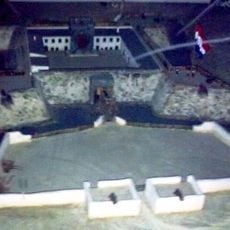
Redoubt Duijnhoop was a square demi-bastioned redoubt of clay and timber built at the mouth of the Salt River, leading into Table Bay, in January–February 1654. It was armed with two 12-pounder guns and served as a signalling station to warn Fort de Goede Hoop of approaching ships.
Built in January–February 1654 at the mouth of the Salt River, Duijnhoop was a square demi-bastioned redoubt of clay and timber, armed with two 12-pounder guns. On 22 April 1654 Jan van Riebeeck reported it fully placed in a position of defence. It was abandoned by 1661, repaired when a French fleet was feared, and demolished in 1672.
The name Duijnhoop, 'dune hope', refers to the sandy dunes at the Salt River mouth. The redoubt was a signalling station: its two 12-pounder guns and position warned Fort de Goede Hoop of approaching ships. It is often confused with that fort, and its site is now marked by later Cape Town development.
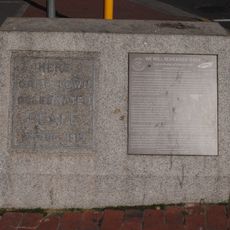
The redoubt no longer exists: it was demolished in 1672, so there is nothing to see at the Salt River mouth. The site lay near the later Grand Parade in central Cape Town, where parts of the fort were uncovered in 2009 during renovations. The location is flat and accessible on foot.
Duijnhoop is often confused with the Fort de Goede Hoop, a separate structure. Parts of the fort were uncovered in 2009 during renovation work on the Grand Parade in central Cape Town, the square where it once stood opposite the city hall.
The community of curious travelers
AroundUs brings together thousands of curated places, local tips, and hidden gems, enriched daily by 92,917 contributors worldwide.