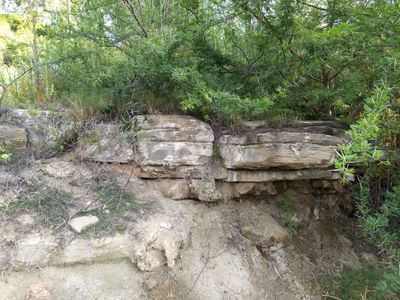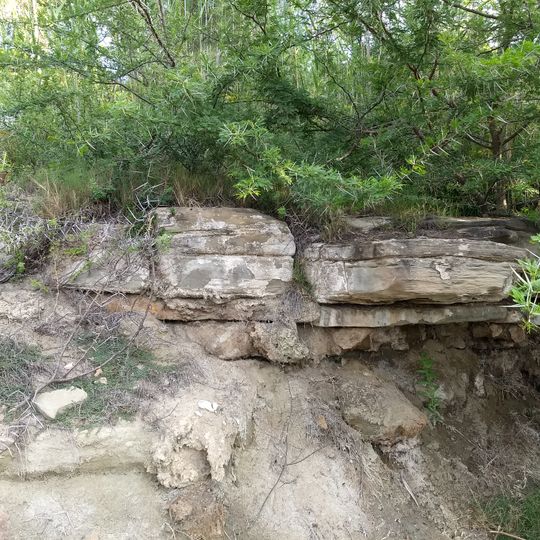
Sundays River Formation, Geological formation in Eastern Cape, South Africa
The Sundays River Formation is a geological layer in the Eastern Cape composed of fine to medium-grained sandstones with embedded shell fragments and clay deposits. Its rocks contain fossils of various marine creatures from an ancient ocean.
The Sundays River Formation is the second youngest of the four formations in the Uitenhage Group of the Algoa Basin, and its type locality is the only place where outcrops have been found. It overlies the Kirkwood Formation and grades laterally into it in some areas, so the two correlate in age at those localities. Its sandstones, siltstones and mudstones were laid down in a shallow marine setting that likely included estuaries and lagoons.
The formation's name comes from the Sundays River, which cuts through the Algoa Basin near its type locality. Its fossil shells, gastropod tracks and the plesiosaur Leptocleidus capensis make it a reference point for palaeontologists working on the Uitenhage Group, and the specimen has so far received little study.
Outcrops are known only from the formation's type locality in the Algoa Basin, so there is no marked visitor site to follow. The succession reaches a maximum measured thickness of about 2,000 m, and the sandstones are often cemented by calcite layers that make the rock hard underfoot. Examine loose blocks and cliff faces rather than hammering bedrock.
The formation's most notable vertebrate find is a near-complete skeleton of the marine plesiosaur Leptocleidus capensis, recovered from these beds. Little study has been done on the specimen, so much about it remains unexamined. Gastropod tracks infilled with siltstone are also common in the sandstones.
The community of curious travelers
AroundUs brings together thousands of curated places, local tips, and hidden gems, enriched daily by 93,456 contributors worldwide.