Tsingy de Bemaraha National Park, National park in Melaky, Madagascar
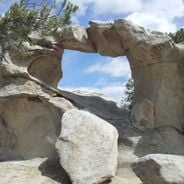
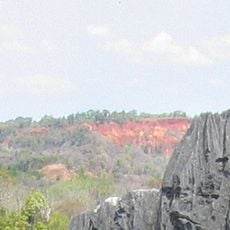
Tsingy de Bemaraha is a national park featuring vast limestone plateaus where sharp rock needles rise densely from the ground in intricate patterns. The landscape consists of deep canyons, caves, and narrow passages carved between the stone formations over millennia.
The limestone formations originated about 200 million years ago when ancient seabeds rose above water and began eroding. Over millions of years, rainfall and underground water carved the sharp-edged structures that define the landscape today.
Tsingy is a Malagasy word for the karst badlands of Madagascar, translated as "where one cannot walk barefoot". The park centres on two formations, the Great Tsingy and the Little Tsingy, and with the adjacent Strict Nature Reserve it has been a UNESCO World Heritage Site since 1990.
The park lies in Antsalova District, Melaky Region, and is crossed by the Manambolo River, whose canyon bounds the reserve to the south. The Great Tsingy and Little Tsingy are separate formations, so plan which one you visit. The ground between the limestone needles is uneven and sharp, and the gorges at their feet stay extremely wet from about 1000 mm of annual rain while the karst surface is savanna-like.
The park's 833 recorded plant species are 86% endemic, and its limestone needles create separate summit, slope and base habitats. The German source lists 13 lemur species, among them sifakas, red ruffed lemurs, eastern bamboo lemurs and aye-ayes, the last recorded only by an unconfirmed sighting near Bekopaka.
The community of curious travelers
AroundUs brings together thousands of curated places, local tips, and hidden gems, enriched daily by 94,094 contributors worldwide.