Hartog Plate, Archaeological artifact at Cape Inscription, Dirk Hartog Island, Australia
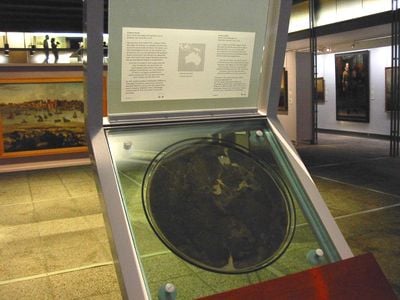
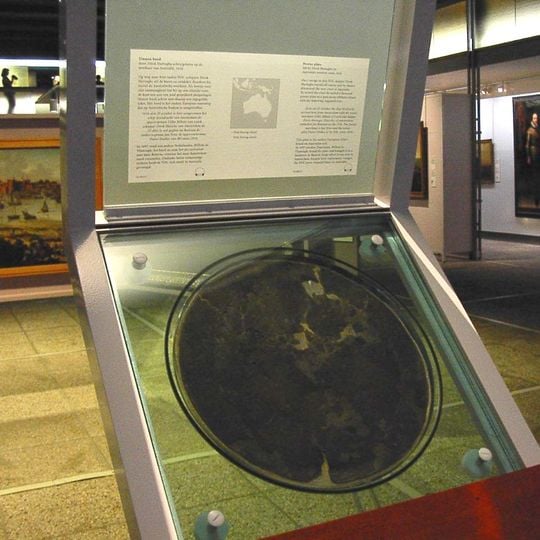
The Hartog Plate is a metal object with an engraved inscription left by a Dutch naval expedition in the early 1600s. It carries the expedition leader's name and information about the ship and crew members who made this voyage.
A Dutch captain left the object on Australia's western coast in 1616 to mark the arrival of his vessel. Around 80 years later, another Dutch seafarer found it, placed a replacement, and carried the original back to Europe.
The name Cape Inscription comes from the plates left at the site: Hartog's pewter dinner plate of 1616, Vlamingh's replacement of 1697, Hamelin's plate of 1801 and Freycinet's lead plate of 1818. The original is now shown in the Rijksmuseum in Amsterdam, while Vlamingh's plate, rediscovered in 1940, is kept in the Western Australian Maritime Museum in Fremantle.
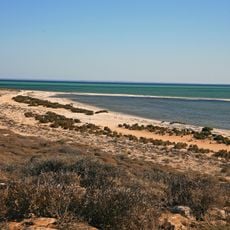
The original pewter plate is held at the Rijksmuseum in Amsterdam, not at the cape. At Cape Inscription, on the northern tip of Dirk Hartog Island in Shark Bay, reachable by boat or four-wheel drive, the site is marked by a lighthouse and commemorative plaques, including a brass plaque from 1938 and a bronze one unveiled in 1997.
The Vlamingh plate, not Hartog's, vanished for over a century: it was rediscovered in 1940 on the bottom shelf of a small room, mixed with old copper engraving plates. It was returned to Australia in 1947, in recognition of Australian losses in the defence of France during the two world wars.
The community of curious travelers
AroundUs brings together thousands of curated places, local tips, and hidden gems, enriched daily by 93,333 contributors worldwide.