OTC Satellite Earth Station Carnarvon, Space communication museum in Carnarvon, Australia
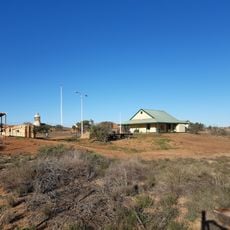
OTC Satellite Earth Station Carnarvon is a decommissioned Earth station in the Shire of Carnarvon, Western Australia. Its best-known structure is the "sugar scoop" antenna, a Casshorn design that became operational on 29 October 1966. A larger parabolic antenna was commissioned in late 1969 to upgrade support for later Apollo missions. The site is a registered heritage place and hosts a node of the Birmingham Solar Oscillations Network.
NASA contracted Australia's Overseas Telecommunications Commission to build the station near Carnarvon to link its local tracking station with the control centre in the USA. Communications support began on 4 February 1967, three weeks after Intelsat-2B launched, and a larger parabolic antenna was commissioned in late 1969 for the later Apollo missions. OTC kept supporting NASA until the tracking station closed in early 1975, and the site was decommissioned in April 1987.
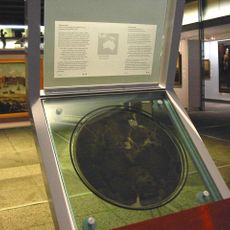
The station served as a vital connection point for communicating with spacecraft and satellites traveling across the Pacific region. Visitors can observe how these facilities enabled communication between Australia and the wider world during the space age.
The Carnarvon Space and Technology Museum opened on the site in 2012, and the former OTC station is a registered heritage place. The grounds hold outdoor antenna structures, so wear sturdy shoes and carry water on hot days. The site also hosts a node of the Birmingham Solar Oscillations Network, so parts of the grounds are in active scientific use.
The site now hosts a node of the Birmingham Solar Oscillations Network, which keeps watching the Sun from Carnarvon. In 2022 ThothX Australia bought the OTC antenna to refurbish it as a deep-space radar for tracking objects in geostationary orbit, extending its coverage from the Americas to the Indo-Pacific.
The community of curious travelers
AroundUs brings together thousands of curated places, local tips, and hidden gems, enriched daily by 94,389 contributors worldwide.