Mount Augustus National Park, Nature reserve in Upper Gascoyne, Western Australia.
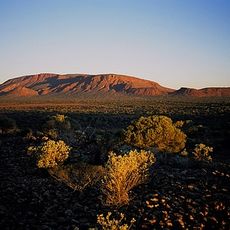
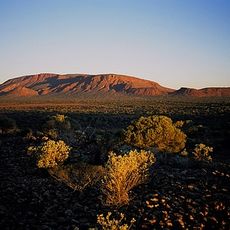
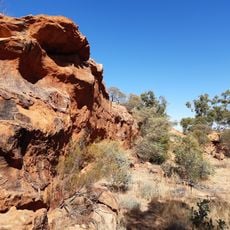
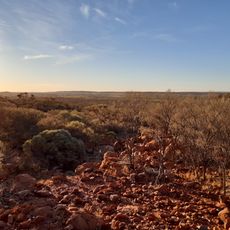
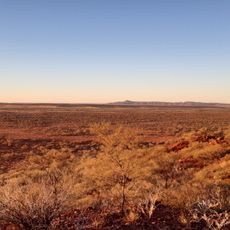
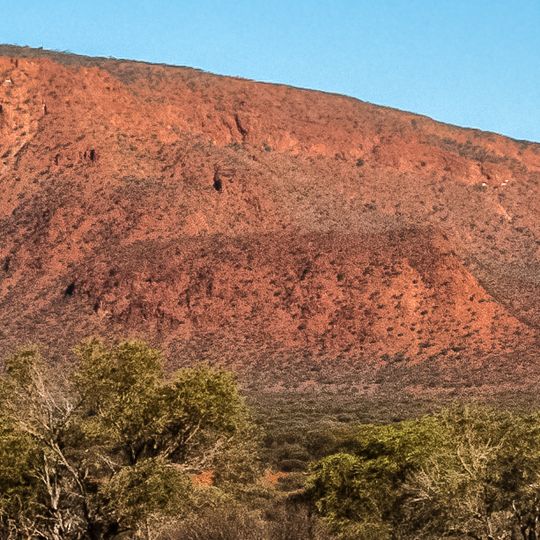
Mount Augustus National Park is centred on Mount Augustus, known as Burringurrah to the Wadjari people, an inselberg or monocline rising 1,106 metres above sea level, about 860 metres above the surrounding plain. Its ridge runs roughly 8 kilometres, and the rock is composed of sandstone and conglomerate of the Mount Augustus Sandstone, folded into an asymmetric anticline above older granite.
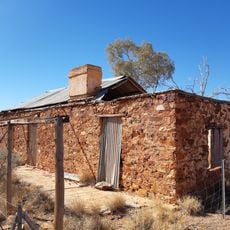
Francis Thomas Gregory reached the summit on 3 June 1858 during a 107-day journey through the Gascoyne region, the first recorded European ascent, and named the peak after his brother Sir Augustus Charles Gregory. Mount Augustus Station was settled as a pastoral lease in 1887. In 1989 portions of that lease and of Cobra Station totalling 9,168 hectares were voluntarily released to create the national park.
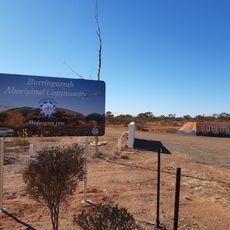
The Wadjari Aboriginal people know the mountain as Burringurrah, the name recorded for the feature the park protects. The park lies in the Gascoyne region, 852 km north of Perth, 490 km by road east of Carnarvon and 390 km northwest of Meekatharra. Its name honours Sir Augustus Charles Gregory (1819–1905), brother of surveyor Francis Thomas Gregory.
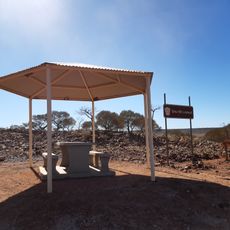
Access follows an unsealed road that requires a four-wheel-drive vehicle and takes several hours from the nearest major settlements. Visitors should be self-sufficient for all needs, as there are no shops, fuel stations, or fresh water supplies inside the park.
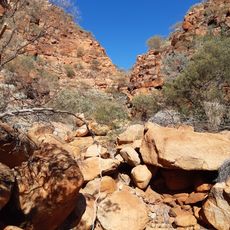
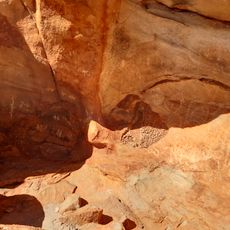
The rock formation is classified geologically as a monocline, a single continuous fold that extends over eight kilometers and is larger than Ayers Rock, often mentioned for comparison. Hikers can observe the unusual layer tilt especially well on the southern side, where the rock runs at a clear angle to the surface.
The community of curious travelers
AroundUs brings together thousands of curated places, local tips, and hidden gems, enriched daily by 94,049 contributors worldwide.