Carnarvon Basin, Sedimentary basin in Western Australia.
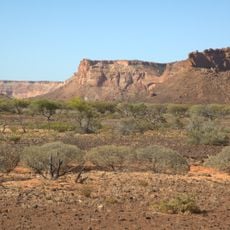
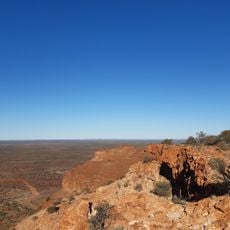
The Carnarvon Basin is a sedimentary basin along the northwestern coast of Western Australia, reaching both onshore and offshore areas. It is made up of stacked layers of rock and sediment formed over geological time and is one of the main sources of oil and gas in the country.
The first major oil discovery in the Carnarvon Basin was made in 1953, which led to intensive exploration across the region in the years that followed. Over the following decades, more fields were found, turning the basin into a central part of Australia's energy supply.
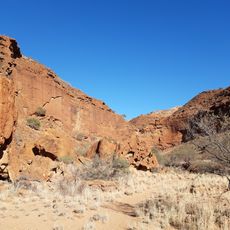
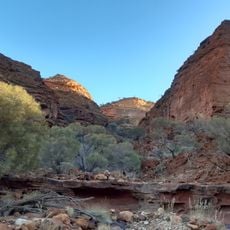
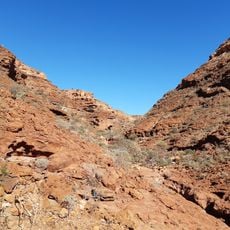
The Carnarvon Basin is one of the few places in Australia where marine fossils from very early geological periods can be seen at or near the surface. Visitors with an interest in geology can observe rock layers in some accessible parts of the area that date back hundreds of millions of years.
The Carnarvon Basin is not a visitor destination in the usual sense, and access to most parts of it is limited to professionals in the energy and research sectors. Anyone planning to travel to the region should check access conditions in advance, as large parts of the area are private or industrial land.
Buried beneath the surface of the Carnarvon Basin is the Gnargoo structure, an ancient impact crater about 75 kilometers (47 miles) wide formed by a cosmic collision many millions of years ago. Because it is completely hidden under layers of sediment, it cannot be seen from the surface and was only identified through drilling and geophysical surveys.
The community of curious travelers
AroundUs brings together thousands of curated places, local tips, and hidden gems, enriched daily by 92,766 contributors worldwide.