Stokes National Park, Nature reserve in Goldfields-Esperance region, Australia
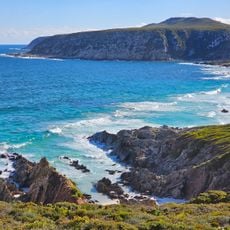
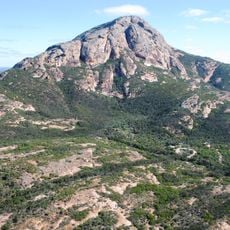
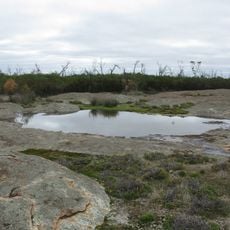
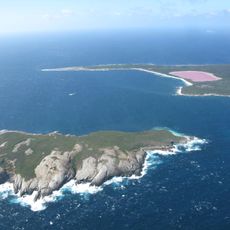
Stokes National Park covers a coastal area with heath, scrubland, dense forest, and sandy beaches along the southern coast of Western Australia. The park also includes Stokes Inlet, a large estuary with shallow waters and varied plant life.
John Septimus Roe named Stokes Inlet in 1848 during his coastal exploration, honoring John Lort Stokes who surveyed the Western Australian coast from HMS Beagle. This early exploration brought the area to the attention of European mapmakers.
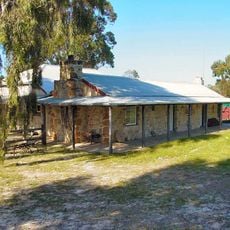
Stokes Inlet and the Lort River were named in 1848 by Surveyor-General John Septimus Roe after his friend John Lort Stokes. From 1860 the area was used mainly for sheep grazing, and late in the 19th century gold prospectors passed through Fanny Cove on their way to the Norseman and Dundas goldfields. The Moir homestead ruins, listed as heritage by 1993, have since been destroyed by fire.
The park has several campsites, with Benwenerup accessible by regular vehicles while other locations require four-wheel drive. The area is best explored with plenty of time and preparation for changing coastal weather.
Stokes Inlet is the largest estuary system east of Albany and one of the few that does not dry out when a sandbar closes its mouth to the sea. The barrier can hold for years; when it finally breaks, the opening to the ocean usually lasts only weeks, so water level and salinity swing with inflow from the Lort and Young rivers and with evaporation.
The community of curious travelers
AroundUs brings together thousands of curated places, local tips, and hidden gems, enriched daily by 94,794 contributors worldwide.