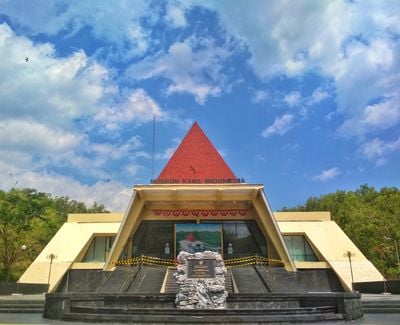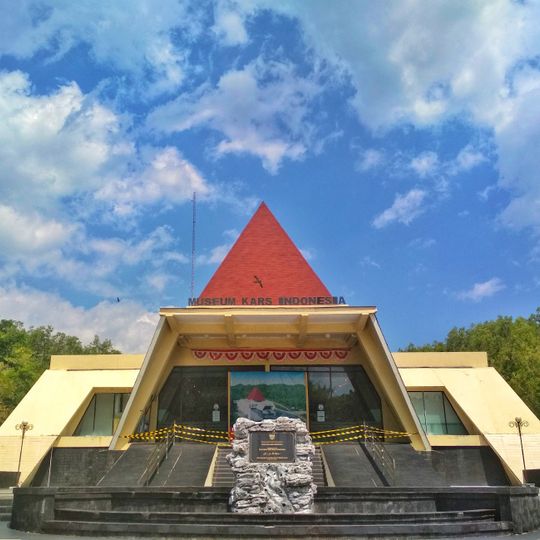
Indonesian Karst Museum, Geological museum in Pracimantoro, Indonesia.
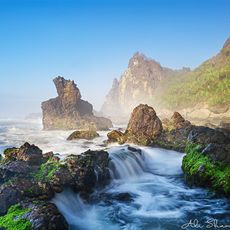
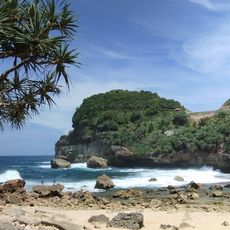
The Indonesian Karst Museum stands in Gebangharjo village, Pracimantoro, Wonogiri, and has three floors. The first floor shows how local people use karst for income and tourism through caves, luweng and beaches; the second explains how karst forms and its types; the third holds an auditorium for meetings and geology documentary screenings.
This facility was founded in 2009 as a center to document karst geology and early settlement of these landscapes. It emerged from interest in understanding how geological processes and human use of the land developed together over thousands of years.
The museum displays how early communities lived in karst landscapes and what tools they used in daily life. The exhibits tell the story of people's relationship with their natural environment across centuries.
The museum stands in Gebangharjo village, Pracimantoro district, Wonogiri, and is reached by road, so most visitors come by private vehicle or on an organised trip. It has three floors, with the auditorium on the top floor, so allow time to work through each level. The five cave sites around it, including Gua Sodong and Gua Tembus, are separate stops; sturdy footwear helps if you continue to them.
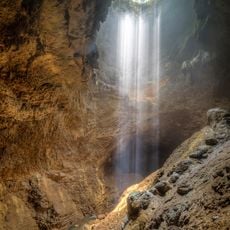
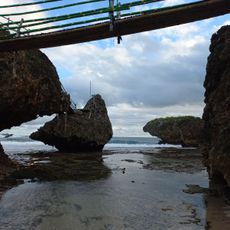
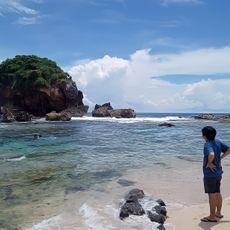
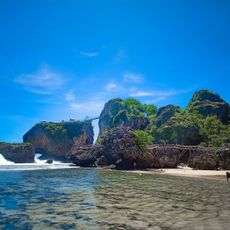
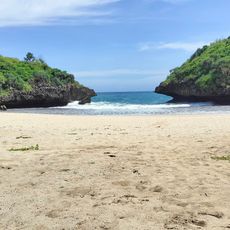
The museum stands in Gebangharjo village surrounded by five karst sites: Sodong Cave, Tembus Cave, Luweng Sapen, Mrico Cave and Potro-Bunder Cave. Visitors can combine the three floors of exhibits with these nearby caves, sinkholes and coastal karst forms that local people manage for tourism and income.
The community of curious travelers
AroundUs brings together thousands of curated places, local tips, and hidden gems, enriched daily by 93,682 contributors worldwide.