Ubud Palace, Royal palace in Ubud, Indonesia
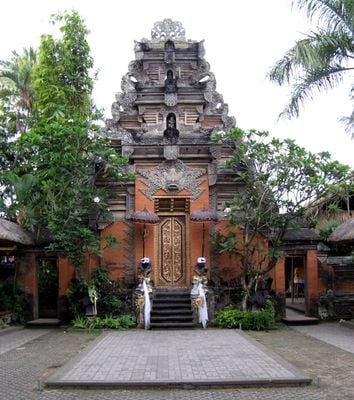
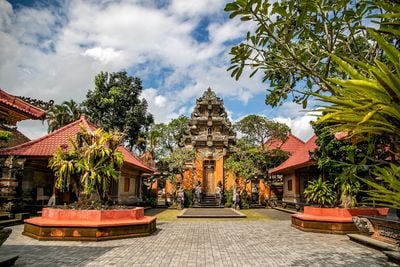
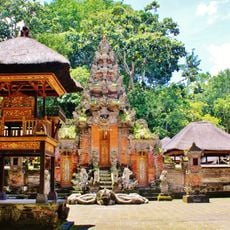
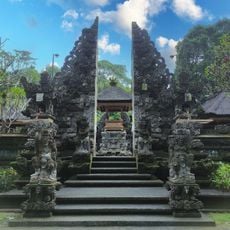
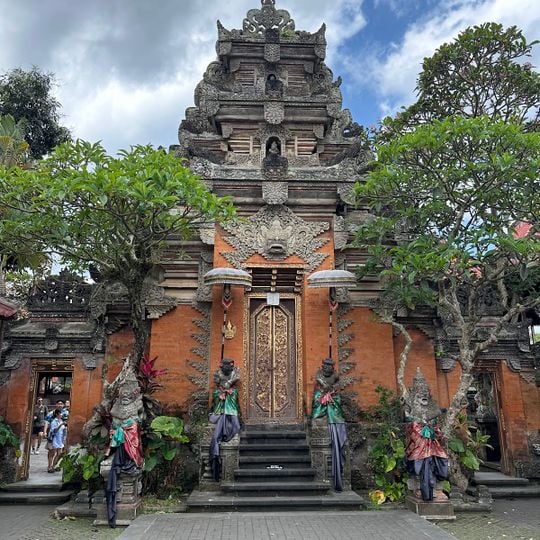
Ubud Palace, or Puri Saren Agung, is a walled royal compound in central Ubud built in traditional Balinese style during the reign of Tjokorda Putu Kandel (1800–1823). Its main pavilion faces a courtyard with an ornamented angkul-angkul gate, and many of the stone carvings were made by local artist I Gusti Nyoman Lempad. To the north stands Pura Marajan Agung, the royal family's private temple.
The palace in its present form was built in traditional Balinese style during the reign of Tjokorda Putu Kandel (1800–1823). After the 1917 earthquake damaged the structures, they were quickly restored because the royal family lived there, and the palace opened to foreign guests in 1928. Many of its stone carvings were made by the local artist I Gusti Nyoman Lempad (1862?–1978).
The name Ubud comes from ubad, the Balinese word for medicine, referring to the healing plants once gathered around Campuhan. The palace's nightly dance stage is framed by an ornamented angkul-angkul, the traditional Balinese gateway with guardian statues, and performances are accompanied by gamelan percussion orchestras.
The grounds are open to visitors during daylight hours, with early morning and late afternoon offering the most peaceful experience when crowds are lighter. Evening dance performances occur multiple times weekly and have limited seating, so arriving early for the show time helps secure a good vantage point.
The stone carvings at the palace were made by I Gusti Nyoman Lempad (1862?–1978), a local artist from the Ubud area. The main pavilion, framed by an ornamented angkul-angkul gate with guardian statues, hosts Balinese dance performances at night, with gamelan percussion orchestras accompanying the dancers.
The community of curious travelers
AroundUs brings together thousands of curated places, local tips, and hidden gems, enriched daily by 93,379 contributors worldwide.