Tarra-Bulga National Park, Nature reserve in City of Latrobe, Australia.
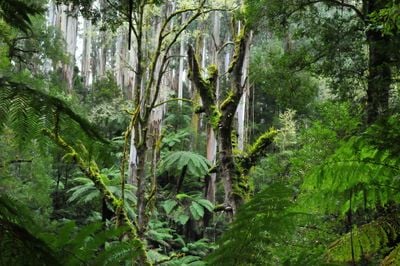
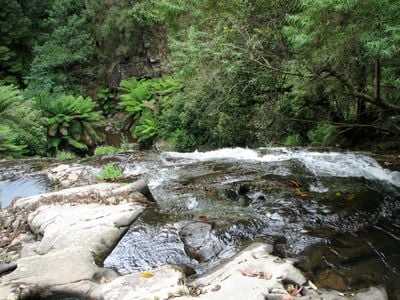
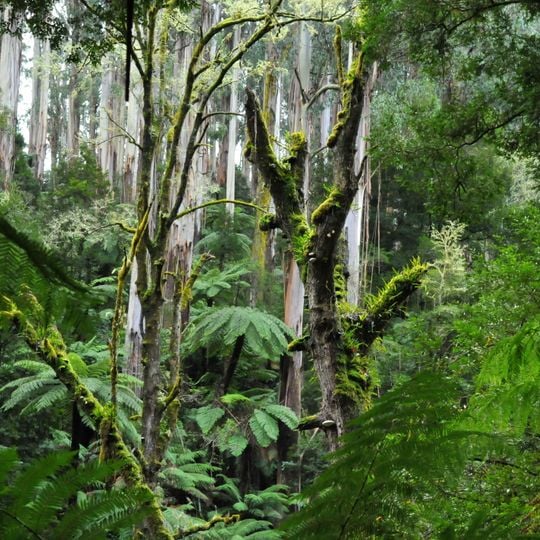
Tarra-Bulga National Park covers 1,522 hectares in the eastern Strzelecki Ranges, with a roughly rectangular shape about 7.9 km east-west and 3.2 km north-south. Its deeply incised river valleys hold wet sclerophyll forest of mountain ash with blackwood and hazel pomaderris beneath, plus tree ferns Dicksonia antarctica and Cyathea australis. Pockets of cool temperate rainforest carry myrtle beech, and the ridges are covered by stringybark eucalypts and gums.
In 1903 the Alberton Shire Council asked the Victorian Government to set aside fern-gully forest near Balook as a public park. A 20-hectare reserve named Bulga National Park followed in 1904, and Tarra Valley National Park was designated nearby in 1906. The two parks were merged as Tarra-Bulga on 17 June 1986 after a land exchange with APM Forests, covering 1,230 hectares.
The park maintains deep connections to Indigenous communities who utilized the forest resources and developed extensive knowledge of local plant species.
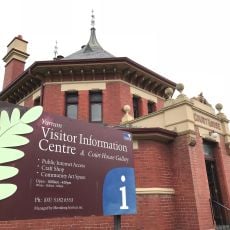
The Balook Visitor Centre is a good starting point and provides maps, restroom facilities, and picnic areas. The various walking tracks have different difficulty levels, so visitors should consider their abilities and available time.
Kara Healey, a ranger in Tarra Valley from 1952 to 1963, became Victoria's first female national park ranger. She collected over 500 specimens, including 80 moss species and more than 160 fungi; two fungi were named after her, Poria healeyi and Lambertella healeyi. A plaque at the park commemorates her work.
The community of curious travelers
AroundUs brings together thousands of curated places, local tips, and hidden gems, enriched daily by 93,389 contributors worldwide.