Chiltern-Mt Pilot National Park, Nature reserve in Victoria, Australia
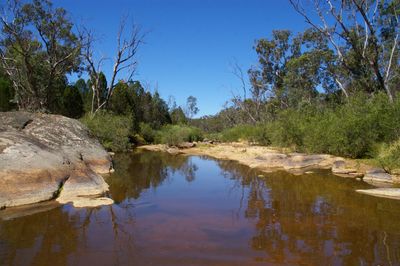
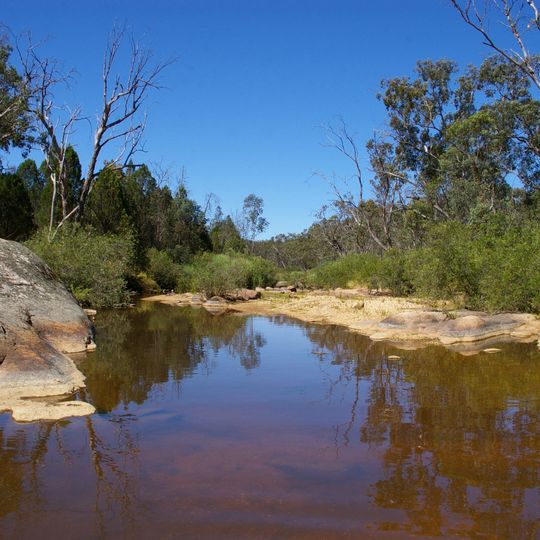
Chiltern-Mt Pilot National Park covers 21,650 hectares about 275 km northeast of Melbourne, running west from Beechworth across the Hume Freeway and the Albury-Melbourne railway to beyond Chiltern. It joins two former parks: the low Ordovician sedimentary hills of the Chiltern section and the Devonian granite of the Mt Pilot section. Woolshed Falls, the Mt Pilot summit and the Yeddonba rock art lie within it.
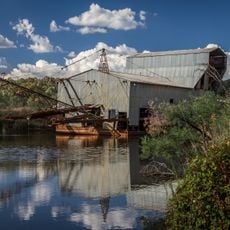
Gold was found in the Chiltern area in the mid-1800s, bringing alluvial and reef mining, quartz mining and gravel quarrying. The Chiltern State Park was reserved in 1980, and the Mt Pilot Multipurpose Park was also established under 1977 Land Conservation Council recommendations. In 2002 the Chiltern Box-ironbark National Park, the Mt Pilot park and Woolshed Falls were combined to form the present national park.
The Yeddonba site holds Aboriginal rock art listed among the park's distinctive features. The sources do not name the artists or the language group, so the drawings are best described simply as culturally significant Aboriginal rock art. Visitors reach the site within the park, where it is presented alongside the goldmining relics.
The White Box Walking Track begins from Honeyeater Picnic Area and features numbered markers along the path that guide visitors. These markers help with navigation and highlight places of natural and historical interest throughout your walk.
The park holds the highest concentration of mammal, bird, and reptile species at any Box-Ironbark location, with more than 200 bird species recorded. This exceptional biodiversity makes it a notable destination for wildlife observation.
The community of curious travelers
AroundUs brings together thousands of curated places, local tips, and hidden gems, enriched daily by 94,367 contributors worldwide.