Mount Cargill, Volcanic summit in northern Dunedin, New Zealand.
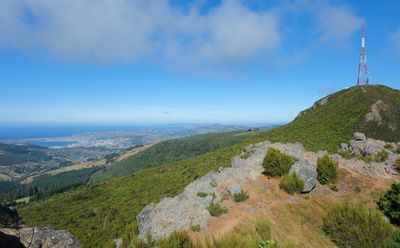
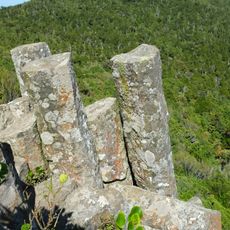
Mount Cargill is a volcanic summit in northern Dunedin, New Zealand, rising to 676 meters above sea level and covered in native forest. Its ridges and rock outcrops show the clear marks of ancient volcanic forces that shaped the whole landform.
The peak is named for Captain William Cargill, an early leader of the Province of Otago. Its Māori name, Kapukataumahaka, predates European settlement. The mountain is among the youngest parts of the extinct Dunedin Volcano, formed between 16 and 10 million years ago. The summit transmitting station was completed in 1970, replacing the original station at Highcliff.
The mountain is called Kāpuka-taumāhaka in Māori, and its name and profile are tied to the legend of a prominent warrior. Seen from Dunedin, Buttar's Peak forms the head and Mount Cargill the body of a reclining figure. The peak also carries the name of Captain William Cargill, an early leader of the Otago Province.
The main track starts at Bethune's Gully and passes through forest sections with stepped paths and sometimes muddy ground, so sturdy footwear is a good idea. Weather can change quickly on the slopes, so bringing a waterproof layer is wise even on a clear morning.
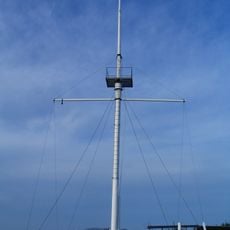
The summit mast, completed in 1970, is 104.6 metres tall and is Dunedin's tallest man-made structure. It began by transmitting television channel DNTV2 (now TVNZ 1), replacing the original station at Highcliff, and analogue broadcasts from the site ended on 29 April 2013.
The community of curious travelers
AroundUs brings together thousands of curated places, local tips, and hidden gems, enriched daily by 93,989 contributors worldwide.