Dunedin Cenotaph, War memorial and heritage site in Queens Gardens, Dunedin, New Zealand.
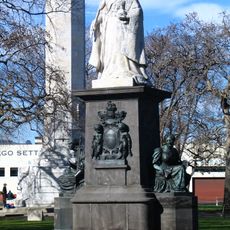
The Dunedin Cenotaph is a 28-metre-tall, eight-sided column of concrete faced with Carrara marble, standing in Queens Gardens. Its shape echoes Dunedin's octagonal city centre. From the column emerge a sacrificial urn and four crosses, and a relief frieze on the base shows a lion, torches, laurel wreaths and fasces, all designed by sculptor Richard Oliver Gross.
The foundation stone was laid in 1924 by Dunedin mayor Harold Livingstone Tapley, with documents including Otago military histories and newspapers sealed in a capsule beneath it. The finished memorial, chosen from 63 competition entries, was unveiled on 17 March 1927 by Prince Albert, Duke of York, before 1,000 relatives of the fallen and 800 returned servicemen. A plaque commemorating the fallen of the Second World War was added after that conflict.
The cenotaph is the regular venue of Dunedin's Anzac Day commemorations on 25 April, which often attract several thousand people. On 25 April 2015, the centennial of Anzac Day, a record crowd estimated at close to 20,000 attended the dawn service. The memorial was initially known as the "Citizens' Memorial" but rapidly became known as the Cenotaph, echoing Sir Edwin Lutyens's monument in Whitehall, London.
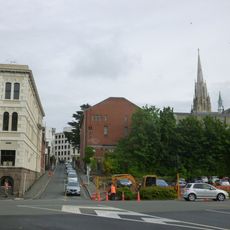
The cenotaph stands in Queens Gardens between The Exchange and the Toitū Otago Settlers Museum, about 400 metres south of The Octagon. One-way streets forming part of State Highway 1 flank the gardens on its east and west boundaries. The site is reached on foot from the city centre.
The memorial includes a plaque that honors all New Zealand recipients of the Victoria Cross, the country's highest military decoration. Trees planted around the site mark specific war anniversaries and commemorate different historical moments.
The community of curious travelers
AroundUs brings together thousands of curated places, local tips, and hidden gems, enriched daily by 93,403 contributors worldwide.