St Bathans fauna, Paleontological site in Central Otago District, New Zealand
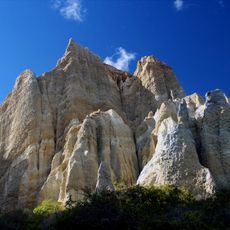
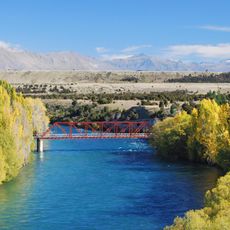
St Bathans fauna is a paleontological site in the Central Otago District of New Zealand's South Island, where fossil remains of mammals, birds, crocodiles, turtles, and reptiles from the Early Miocene have been found. The deposits are scattered along the Manuherikia River valley, near the old gold mining settlement of St Bathans.
The St Bathans vertebrate research programme was started in 2000 by Trevor Worthy, Alan Tennyson of Te Papa Tongarewa and Craig Jones. Work since then has recovered a basal theriiform mammal, several bat species including the giant burrowing bat Vulcanops, and the possibly flighted kiwi Proapteryx. The fossils come from the lower Bannockburn Formation, laid down 19–16 million years ago.
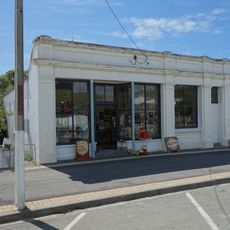
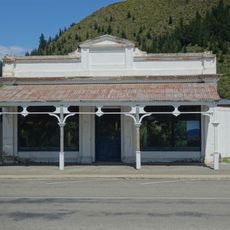
The site's name comes from the gold-mining settlement of St Bathans, where the fossil-bearing layers of the Bannockburn Formation are exposed along the Manuherikia River. The fauna includes the St Bathans mammal, a late-surviving archaic theriiform, alongside mystacine bats and Vulcanops, a burrowing bat three times the size of today's relatives. These finds show small land mammals were a common part of New Zealand's Miocene fauna.
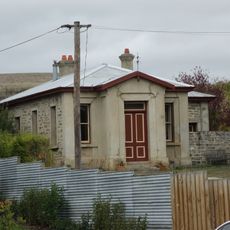
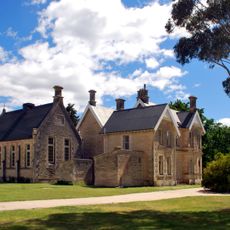
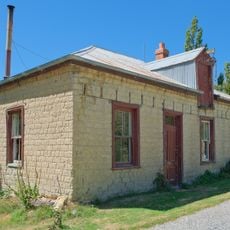
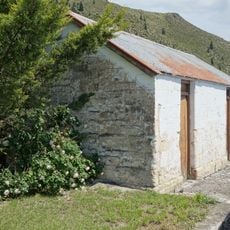
The fossil-bearing layer is exposed at several points along the Manuherikia River and around the old gold-mining town of St Bathans, so the sites are not in one place. Access is on foot over uneven ground; ask locally which exposures are reachable before setting out.
The fossils were preserved in the sediments of an ancient freshwater lake that had a warm, subtropical climate, roughly 19 to 16 million years ago. This lake left behind layers that captured a range of animals, including some found nowhere else in New Zealand's fossil record.
The community of curious travelers
AroundUs brings together thousands of curated places, local tips, and hidden gems, enriched daily by 94,132 contributors worldwide.