Fox Glacier, Glacier in Westland Tai Poutini National Park, New Zealand
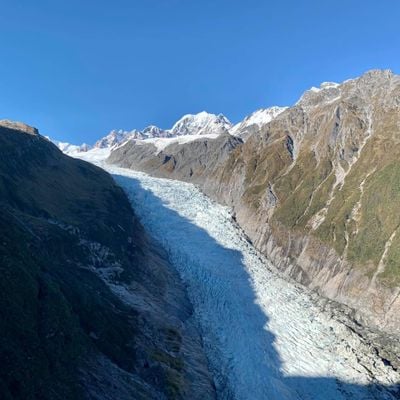
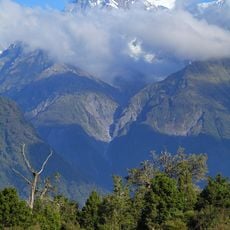
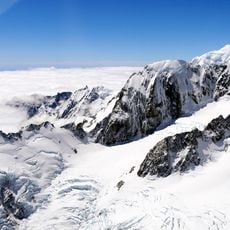
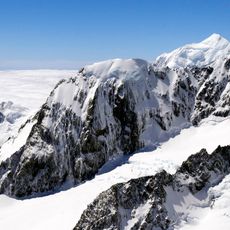
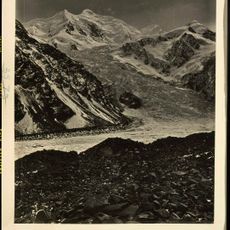
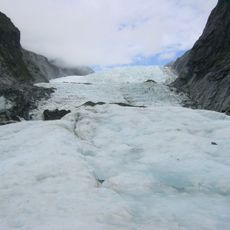
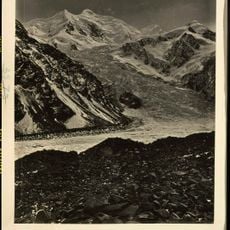
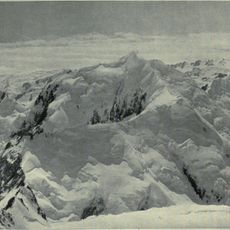
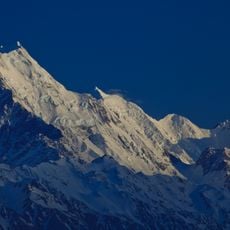
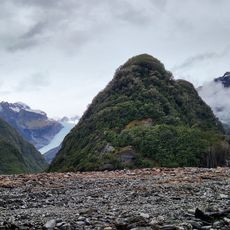
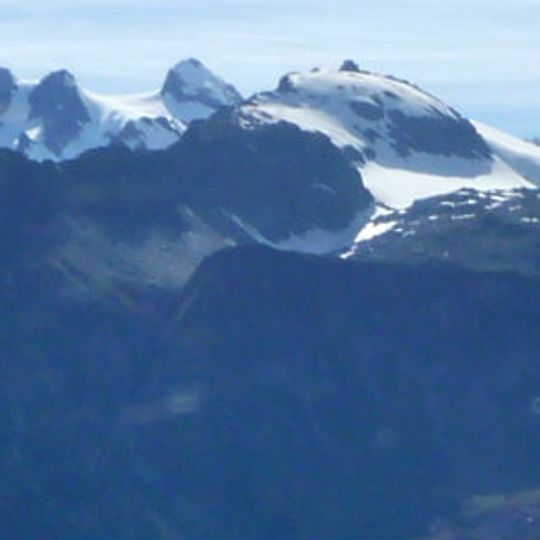
Fox Glacier / Te Moeka o Tuawe is a temperate maritime glacier in Westland Tai Poutini National Park, New Zealand. It runs 11.7 kilometres from the Southern Alps, fed by four alpine glaciers, and drops 2,600 metres to a terminal face about 300 metres above sea level near rainforest. The photograph shows broad white snow patches broken by dark rock on the upper slopes, passing into a blue-grey, crevassed ice face below.
German geologist Julius von Haast named the glacier after Prince Albert in 1865, but the name changed to honor Premier Sir William Fox in 1872. This renaming came during a period when European explorers mapped and scientifically documented the region, while Māori had already known the area for centuries.
The Māori name Te Moeka o Tuawe means 'the bed of Tuawe': tradition says Hine Hukatere's tears for her lost lover Tuawe were frozen by Rangi the Sky Father, and Fox Glacier marks his resting place while Franz Josef marks hers. In 1857 local Māori guided Leonard Harper and Edwin Fox, the first Europeans to see the glaciers.
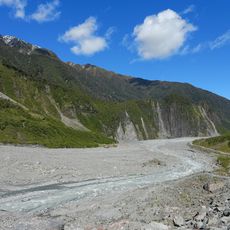
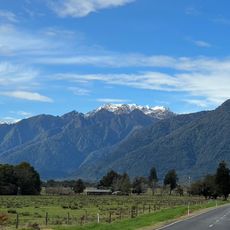
A seven-kilometre side road branches southeast from State Highway 6 just south of Fox Glacier village and leads close to the glacier gate. The terminal face sits only about 300 m above sea level, near rainforest, so the valley is reached on foot from the road end. The 2009 high point of the ice is still marked by a vegetation line on the southern slope above the present tongue.
The glacier draws ice from four alpine sources, creating a dynamic flow that advanced between 1985 and 2009 against the global retreat trend. This movement surprised researchers and offers valuable insight into how local weather patterns and snowfall can influence glacier behavior even when others are shrinking.
The community of curious travelers
AroundUs brings together thousands of curated places, local tips, and hidden gems, enriched daily by 93,404 contributors worldwide.