Punakaiki, locality in Buller District, West Coast Region, New Zealand
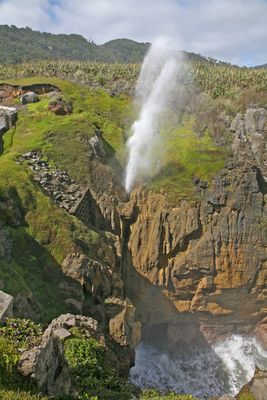
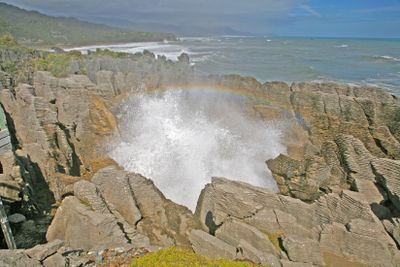
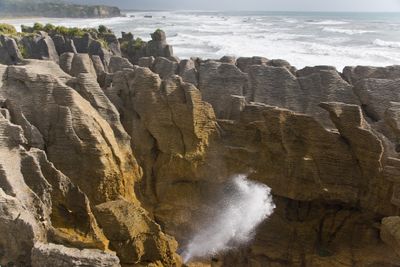
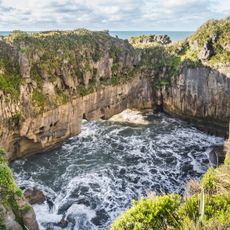
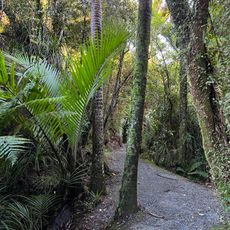
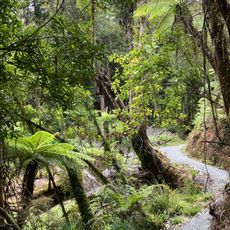
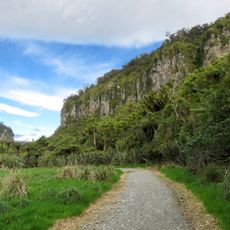
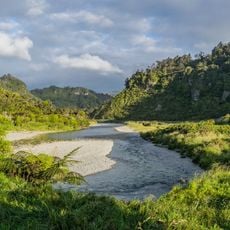
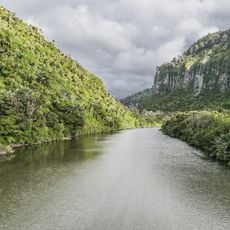
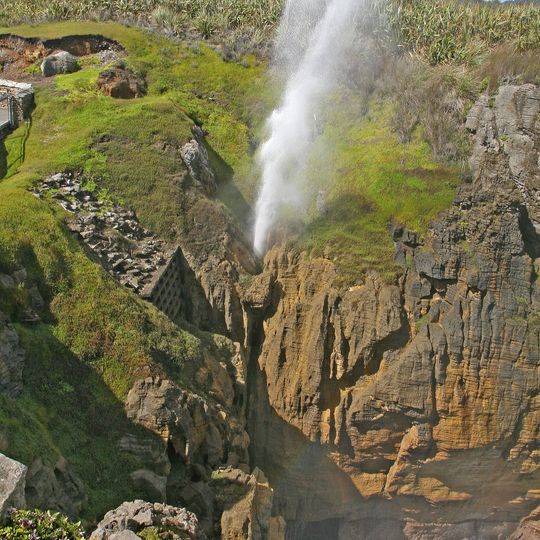
Punakaiki is a small settlement on the west coast of New Zealand's South Island, surrounded by a national park. The village of around 70 residents is known for its distinctive limestone rocks at Dolomite Point that resemble stacked pancakes, pierced by blowholes that shoot water high into the air when waves are rough.
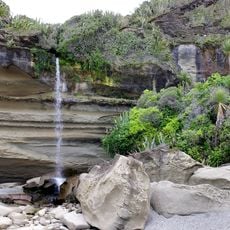
The rocks in Punakaiki formed around 30 million years ago when tiny seashells from marine creatures hardened into limestone layers on the ocean floor. Earth movements later lifted these layers above sea level, where rain and wind carved away softer sections to create the distinctive pancake-like appearance seen today.
The name Punakaiki comes from Māori language and means a place where things break through. This word describes how waves crash through the limestone formations and water shoots up through the blowholes.
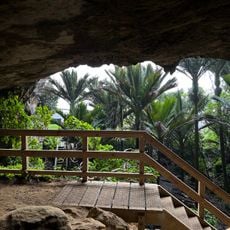
The walk to the Pancake Rocks is simple and takes about ten to twenty minutes on a flat loop trail that is also accessible for wheelchairs and strollers. A visitor center near Dolomite Point offers information, and nearby you will find a cafe, an outdoor shop, parking, and various accommodations ranging from campgrounds to hotels.
The tāiko, or Westland petrel, breeds only in this area and is a nocturnal bird that flies into its burrow at dusk during winter months. The region also homes the weka, a flightless bird with reddish-black feathers that runs quickly and was historically caught by Māori people using snares.
The community of curious travelers
AroundUs brings together thousands of curated places, local tips, and hidden gems, enriched daily by 60,000 contributors worldwide.