Abel Tasman Monument, Maritime memorial in Abel Tasman National Park, New Zealand.
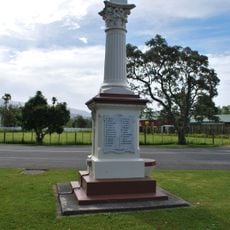
The Abel Tasman Monument is a white concrete column 9.1 metres tall and 1 metre wide, designed by Ernst Plischke as an abstracted sail. It stands on a wooden platform on a bluff about 50 metres above the sea at Tarakohe, with a bronze tablet set into its lower section. Information panels on the platform explain the encounter from both European and Māori perspectives.
Dutch sailor Abel Tasman arrived at this coast in 1642 as the first European with documented contact with people living in this region. The encounter was brief and turned violent, marking the moment when two completely different cultures and ways of life collided.
The monument carries the name of a Dutch sailor who first sailed along this coast from a European perspective. Today it serves dual purposes: honoring early European exploration while also marking where two different worlds first encountered each other.
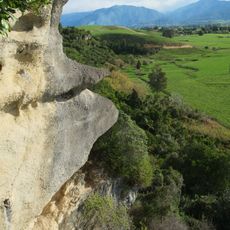
The monument stands on a wooden platform on a headland about 50 metres above the sea, roughly 70 metres from Abel Tasman Drive; it is freely accessible at any time. Information panels on the platform explain the encounter from both European and Māori perspectives. The site looks over Golden Bay / Mohua and Ligar Bay to the east.
The marble tablet beside the column is cut from stone quarried on Tākaka Hill, and its lettering was designed by the art historian Janet Paul. A bronze plaque donated by Queen Juliana of the Netherlands was added in 1970. The original 1942 inscription named Tasman, pilot major Frans Jacobszoon Visscher and the crews of the Heemskerck and Zeehaen, but said nothing of Ngāti Tūmatakōkiri.
The community of curious travelers
AroundUs brings together thousands of curated places, local tips, and hidden gems, enriched daily by 93,420 contributors worldwide.