Puhi Kai Iti / Cook Landing Site, Historic landing monument in Gisborne District, New Zealand.
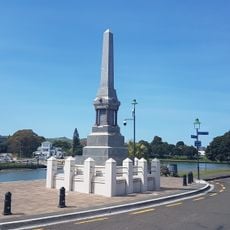
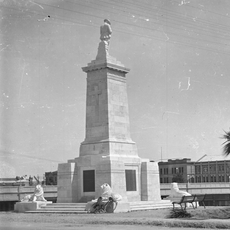
Puhi Kai Iti / Cook Landing National Historic Reserve lies near the eastern bank of the Tūranganui River in Gisborne, where land reclamation for the port has left the 1906 granite obelisk about 75 metres from the shoreline. The reserve holds the obelisk, the Ikaroa sculpture honouring the navigator Māia and his whare wānanga, nine pou for the nine Māori killed in 1769, and steel tukutuku panels made by Ngāti Oneone.
The site marks the location of a significant arrival in 1769 that began a new era of contact in the Pacific region. Official recognition as a National Historic Reserve followed in 1990 after negotiations to protect the historic landscape.
The name Puhi Kai Iti comes from a feathered streamer on the sternpost of the waka Te Ikaroa-a-Rauru, said to have been laid on the shore after settlement. A whare wānanga was built on top, where the navigator Māia taught traditional knowledge from the homeland. Nine pou honour the nine Māori killed when Cook landed in 1769, and steel tukutuku panels were made by Ngāti Oneone, whose ancestry traces to these waka.
The reserve lies inland from the current shoreline: land reclamation for Gisborne's port left the Cook Monument about 75 metres from the water by 1959, and a protected line of sight to the ocean was added in 1974. The obelisk, the nine pou, the Ikaroa sculpture and the steel tukutuku panels stand close together on flat ground, so the whole site can be walked in a short time.
The 2019 upgrade added nine pou, one for each Māori killed when Cook's party landed in October 1769, plus a separate sculpture honouring Te Maro, an ancestor of Ngāti Oneone. The British High Commissioner expressed the United Kingdom's regret for Te Maro's death at a ceremony on the site.
The community of curious travelers
AroundUs brings together thousands of curated places, local tips, and hidden gems, enriched daily by 94,550 contributors worldwide.