Pukematekeo, Summit in Waitakere Ranges, New Zealand
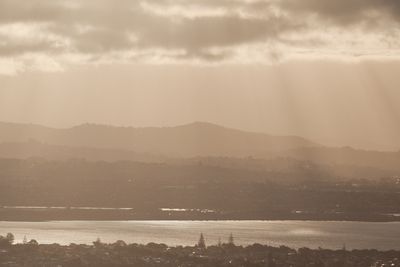
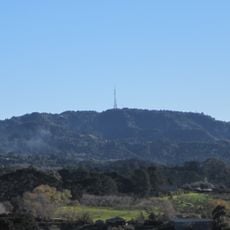
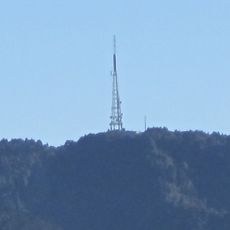
Pukematekeo is a 336-metre hill in the Waitākere Ranges, the northernmost peak of the Waitākere Ranges Regional Park. It is the remnant of an eastern vent of the Miocene Waitākere Volcano, made of tilted andesite flows and volcanic litharenites. The 100-metre-thick sequence contains at least 11 thin andesite flows interspersed with pyroclastic deposits and lapilli tuffs.
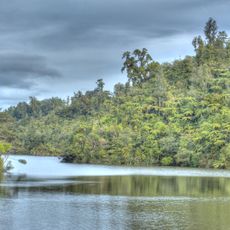
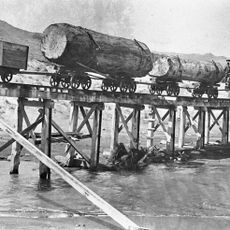
Pukematekeo was the site of a Te Kawerau ā Maki pā, one of the few known inland pā in the Waitākere Ranges. Between 1885 and 1888 Ebenezer Gibbons ran a kauri sawmill and tramline from the hill's base to Swanson railway station; the route later became Tram Valley Road. The Auckland City Council bought the surrounding land from settlers in 1926 under the Public Works Act to create a scenic kauri forest reserve, and road access arrived on 10 June 1939 when Scenic Drive was extended between Waiatarua and Swanson.
The name Pukematekeo is a Māori geographical description referring to the hill as the final one of the Waitākere Ranges. The hill lies within the traditional rohe of the Te Kawerau ā Maki iwi and was the site of one of the few known Te Kawerau ā Maki pā in the inland ranges.
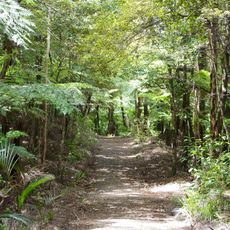
Reaching the summit involves hiking through connected trail systems that branch from Scenic Drive. The walk is moderately accessible, but visitors should expect uneven paths and steep sections along the way.
The summit serves as a water divide feeding two separate river systems: the Kumeu River flows northward while Cassel Stream flows eastward into Henderson Creek. This hydrological role makes the location central to the regional ecosystem.
The community of curious travelers
AroundUs brings together thousands of curated places, local tips, and hidden gems, enriched daily by 94,314 contributors worldwide.