Albert Park, Urban park in central Auckland, New Zealand.
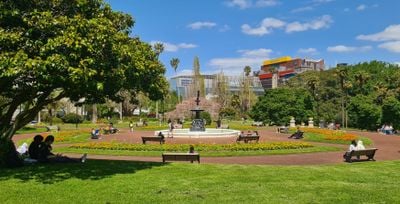
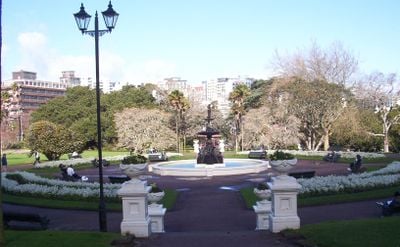
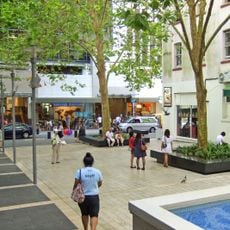
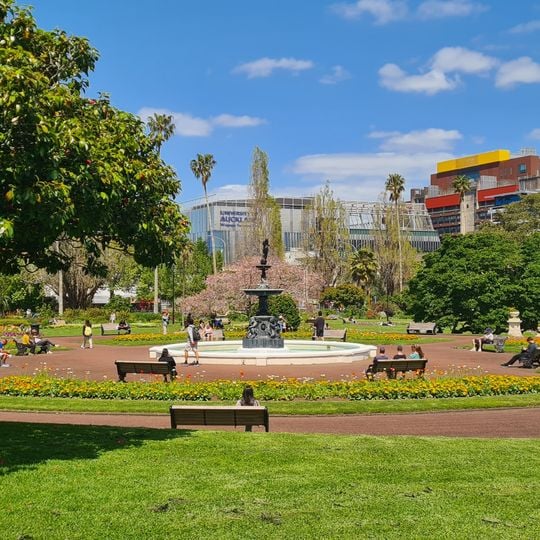
Albert Park is an urban park in central Auckland situated between Wellesley Street East and Princes Street. It contains over 80 tree species and formal gardens arranged around a central fountain, with sealed pathways and stairs connecting it to the Auckland Art Gallery, University of Auckland, and the central business district.
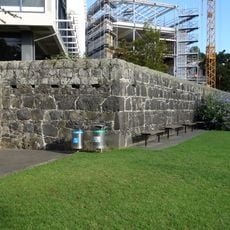
Rangipuke was a Māori kāinga with Te Horotiu Pā on the park's northwest; a Waiohua settlement, Mangahekea, was sacked here by Ngāti Whātua in the 1740s. From the 1850s Albert Barracks, a fort of local volcanic stone, occupied the site; part of its wall stands in the University of Auckland grounds. The land was set aside as a reserve in the 1870s and laid out as a park in the 1880s.
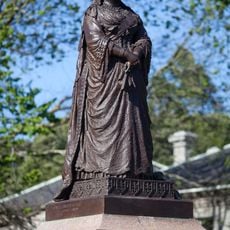
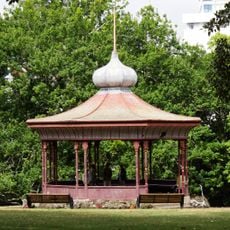
The park's centrepiece is a cast-iron fountain imported from Great Britain in 1881, topped by Aphrodite and surrounded by cherubs riding dolphins that spout water. Nearby stand a bronze Queen Victoria (1897) and a bandstand first used in 1901 for her memorial. A marble Boer War memorial and F. J. Williamson's statue of Sir George Grey (1904) recall later chapters.
The park has multiple entrances and sealed pathways making it easy to walk through and connect to nearby attractions. Its location near public transport and the city center makes it convenient to visit as a break between other activities.
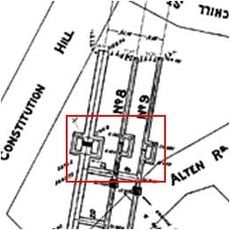
The tunnels under Albert Park total about 4.8 km and were sealed before World War II ended. One entrance is still visible on Kitchener Street, between the courthouse and Bacons Lane, though the passages remain closed.
The community of curious travelers
AroundUs brings together thousands of curated places, local tips, and hidden gems, enriched daily by 94,072 contributors worldwide.