Te Whanganui-o-Hei / Cathedral Cove Marine Reserve, Marine reserve in Thames-Coromandel District, New Zealand.
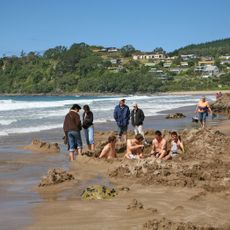
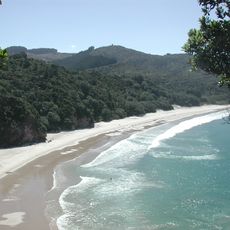
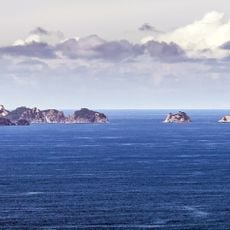
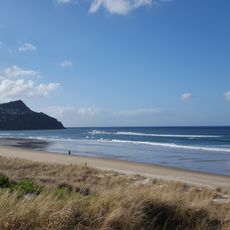
Te Whanganui-o-Hei is an 840-hectare marine reserve stretching along the eastern coastline of the Coromandel Peninsula, marked by rock arches, caves, and sandy coves. Within its protected waters, kelp forests grow on the seabed and provide shelter for snapper, grouper, and numerous invertebrates.
This protected area was established in 1992 after decades of overfishing had depleted stocks along the coastline. Since then, fish populations within its boundaries have recovered and gradually restored biodiversity to the surrounding waters.
The Māori name Te Whanganui-o-Hei means "the Great Bay of Hei", after Hei, a tohunga (priest) who came on the Te Arawa waka. Tradition says Hei claimed the Mercury Bay area for his tribe by naming Motueka Island "Te Kuraetanga-o-taku-Ihu" (the outward curve of my nose), said to have been spoken near present-day Hahei.
The Mautohe Cathedral Cove Track reopened on 1 December 2024 after Cyclone Gabrielle damage; the Hahei Beach Walk to the Grange Road entrance stays closed because of land instability. An alternative viewing point was set up, and boats give another view of the cove. Foreign visitors are to pay an entry fee of NZ$20 to NZ$40 under a proposed scheme.
The cove appears in two music and film productions: the Pevensie children re-enter Narnia through the cave in The Chronicles of Narnia: Prince Caspian (2008), and the beach features in the music video for "Can't Hold Us" (2011) by Macklemore and Ryan Lewis featuring Ray Dalton. The reserve covers 840 hectares, from Cook Bluff to the northern end of Hahei Beach.
The community of curious travelers
AroundUs brings together thousands of curated places, local tips, and hidden gems, enriched daily by 94,460 contributors worldwide.