Lansdowne Bridge, Historical sandstone bridge in New South Wales, Australia
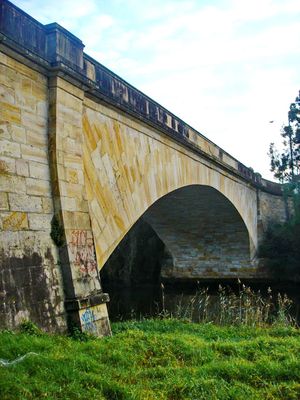
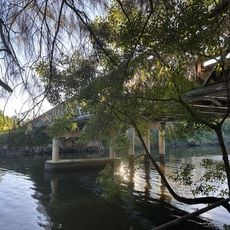
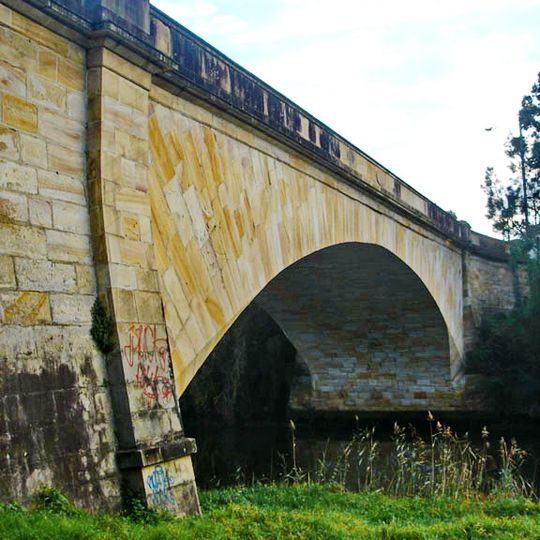
Lansdowne Bridge is a sandstone arch bridge over Prospect Creek in New South Wales, Australia, built with a single arch that connects both banks. It sits along the Hume Highway and still carries road traffic, with its original form intact.
The bridge was built from 1834 under the direction of David Lennox, using convict labor, and opened on January 26, 1836, the 48th anniversary of European settlement in the colony. Lennox was a Scottish stonemason who became the leading bridge builder in the colony.
The bridge takes its name from Henry Petty-Fitzmaurice, the 3rd Marquess of Lansdowne, a British statesman involved in colonial affairs during the 19th century. Crossing it today means following the same route that once connected Sydney to the interior of the continent.
The bridge sits along the Hume Highway southwest of Sydney and is easy to reach by car. Pedestrians can cross on foot, but should stay alert since vehicles pass regularly on the roadway.
Lansdowne Bridge has the longest span of any surviving masonry arch bridge in Australia, which makes it a notable example of what could be achieved with hand tools and convict labor in the 1830s. The sandstone blocks were cut and shaped on site, without the use of any machinery.
The community of curious travelers
AroundUs brings together thousands of curated places, local tips, and hidden gems, enriched daily by 91,141 contributors worldwide.