Australian Museum, Natural history museum in Sydney, Australia
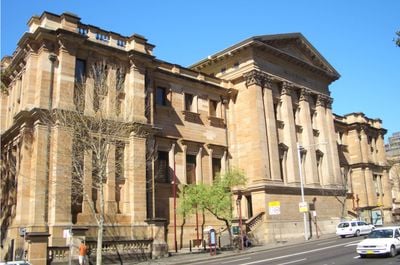
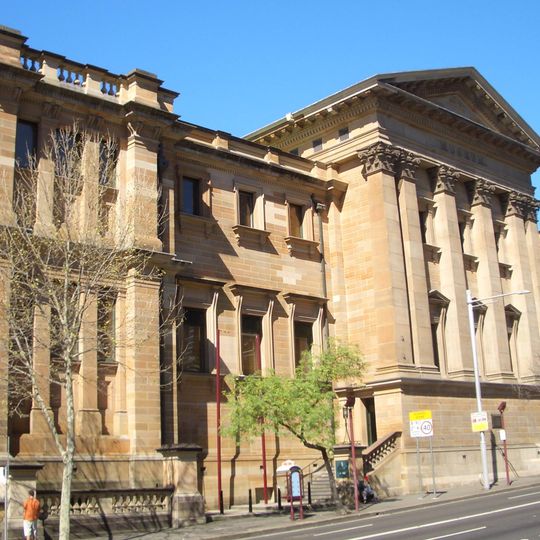
The Australian Museum occupies a sandstone building at the corner of William Street and College Street in Sydney, with a lower balustraded wing and a taller section where fluted columns rise to a triangular pediment carved with the word MUSEUM. Its collections of vertebrate and invertebrate zoology, mineralogy, palaeontology and anthropology number over 21 million objects.
The museum was founded in 1827, when Earl Bathurst, Secretary of State for the Colonies, wrote to the governor of New South Wales and provided £200 a year towards its upkeep. Alexander Macleay, an entomologist who arrived in 1826, had lobbied for it. First called the Colonial Museum or Sydney Museum, it was renamed the Australian Museum in June 1836. The Long Gallery, the earliest building on the site, dates from around 1846; James Barnet's sandstone wing opened in May 1857, and his west wing followed in 1868.
The mineral collection displays over 400 native gemstones from different Australian mining regions and connects geological research with traditional stoneworking craft. Many visitors pause before the large display cases holding rare opals and crystal formations.
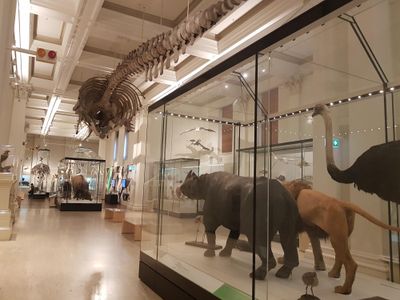
Galleries open daily from 10:00 AM to 5:00 PM and provide wheelchair-accessible routes on all floors. Visitors planning to see the skeleton collection and marine rooms should allow at least two hours.
Staff coordinate the FrogID project, in which people across Australia record frog calls and send them to a central archive. This community-based method has helped researchers map the distribution of over 240 amphibian species and detect threats early.
The community of curious travelers
AroundUs brings together thousands of curated places, local tips, and hidden gems, enriched daily by 94,078 contributors worldwide.