Ormiston House Estate, Heritage-listed plantation in Redland City, Australia.
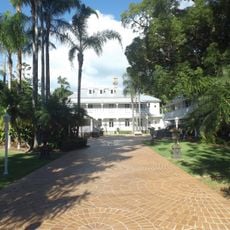
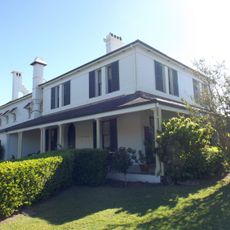
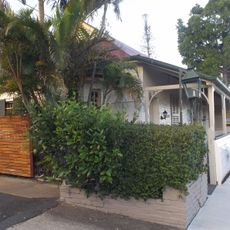
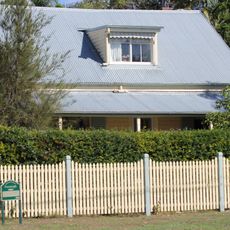
Ormiston House Estate is a single-storey brick residence with a T-shaped plan, encircled by verandahs, built in stages between c.1858 and 1865. Its earliest southeast section is Flemish bond face brick, while the later north wing and western addition are English bond. The house overlooks Raby Bay, with grounds extending to the water's edge and terracing to mangrove wetlands.
Louis Hope, a member of the Queensland Legislative Council, built Ormiston House in stages between c.1858 and 1865. In 1864 he erected Queensland's first sugar crushing mill on Hilliards Creek, and the first commercially milled sugar in the colony was produced there that September. By 1865 the plantation was the largest in Queensland; the mill was sold around 1875 after litigation with a neighbour.
The name Ormiston is said to come from a Hope ancestral name in Scotland. In 1935 the International Society of Sugar Technologists erected a cairn in the front grounds to commemorate Louis Hope's pioneering work in the Queensland sugar industry. The house is now run as a house museum by the Ormiston House Restoration Association, established in the mid-1960s.
The estate is located at 277 Wellington Street and is managed by the Ormiston House Restoration Association with guided tours for visitors. It is best to check ahead for tour availability and parking options at the location.
The grounds were originally designed to connect with mangrove wetlands along Raby Bay, where the old terraced gardens still descend toward the water today. These landscape features link the house to its natural surroundings and show how settlers integrated their property with the coastal environment.
The community of curious travelers
AroundUs brings together thousands of curated places, local tips, and hidden gems, enriched daily by 94,393 contributors worldwide.