Bluefish Caves, Archaeological caves in Keele Range, Canada.
Bluefish Caves is an archaeological site in the Keele Range, Canada, with three limestone cavities on a ridge above the Bluefish River. The cavities contain sediment layers that accumulated during the late Pleistocene and preserve remains from the last Ice Age.
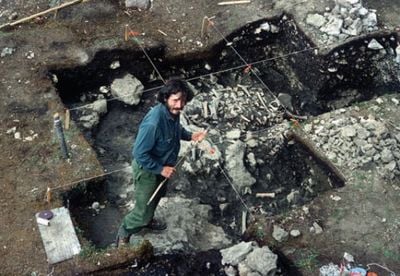
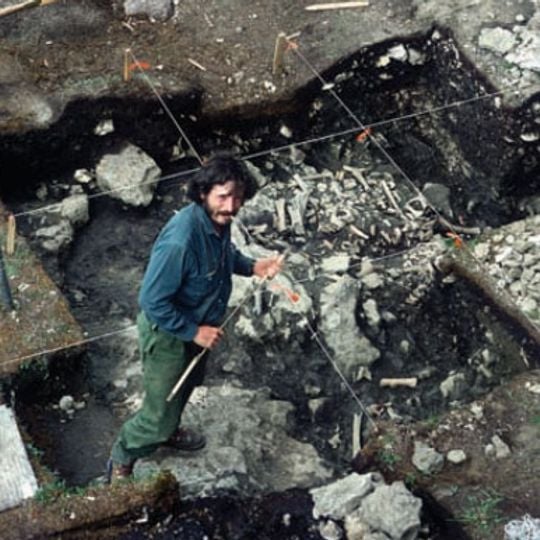
Research between 1977 and 1987 uncovered evidence of human activity 24,000 years ago, including animal bones with processing marks from stone tools. These discoveries challenged earlier assumptions about the settlement of North America and pushed back the beginning of human presence on the continent by many millennia.
The caves lie in the traditional territory of the Vuntut Gwitchin First Nations, who knew the site long before a 1976 fishing expedition brought it to researchers' attention. Since 2008 the Vuntut Gwitchin have supported renewed excavation work by Jacques Cinq-Mars, and a documentation centre or museum is planned in Old Crow. The Yukon Beringia Interpretive Centre in Whitehorse displays artefacts from the caves.
The site lies 54 kilometers (34 miles) southwest of the Old Crow community and requires specialized transport and permits for access. Those planning research or educational visits should coordinate in advance with local authorities, as the area is difficult to reach.
The 24,000-year date rests on animal bones, not human remains: a caribou tibia with wear marks was dated to about 24,820 years, and a worked mammoth bone to 23,500 years, though it is unclear whether the bone was found and modified much later. No human skeletons have ever been found in the caves.
The community of curious travelers
AroundUs brings together thousands of curated places, local tips, and hidden gems, enriched daily by 92,772 contributors worldwide.